Summary
✓Reviewed by David ChenIf you searched for the best portable Bluetooth speaker in September 2026 expecting a totally new flagship to headline the list, the honest answer is more nuanced: the standout release this cycle is a generational refinement, not...
Table of Contents
- 1 Why Portable Speaker Shopping Got Confusing in 2026
- 2 JBL Xtreme 5: What We Know Is Confirmed Right Now
- 3 The Broader September 2026 Speaker and Home Audio Landscape
- 4 Current vs. Superseded: A Quick Reference Table
- 5 What Generational Confirmation Actually Tells You as a Buyer
- 6 Portable Speakers vs. Home Stereo: Which Fits Your Listening Habits?
- 7 Where Bluetooth Speakers Intersect With Vinyl Listening
- 8 Headphones as the Other Portable Audio Path
- 9 Turntable-Adjacent Releases Worth Tracking This Cycle
- 10 Cartridges and Signal Chain: The Upgrade Path Portable Speakers Can’t Replace
- 11 Budget Tiers: Where Portable Speaker Money Actually Goes
- 11.1 Entry Tier (Under $300)
- 11.2 Mid Tier ($300–$1,000)
- 11.3 Premium Tier ($1,000+)
- 12 Reading a Portable Speaker Spec Sheet Without Getting Misled
- 13 Limitations of This Guide
- 14 Frequently Asked Questions
- 14.1 Is the JBL Xtreme 5 the newest model in the Xtreme line?
- 14.2 How much does the JBL Xtreme 5 cost in the United States?
- 14.3 Can I use a portable Bluetooth speaker with a turntable?
- 14.4 Should I buy a portable speaker or a home stereo system for vinyl listening?
- 14.5 Are older JBL Xtreme models still worth buying at a discount?
- 15 Related Reading
- 15.1 See Also
- 16 Conclusion: Buy for Confirmed Status, Not Marketing Language
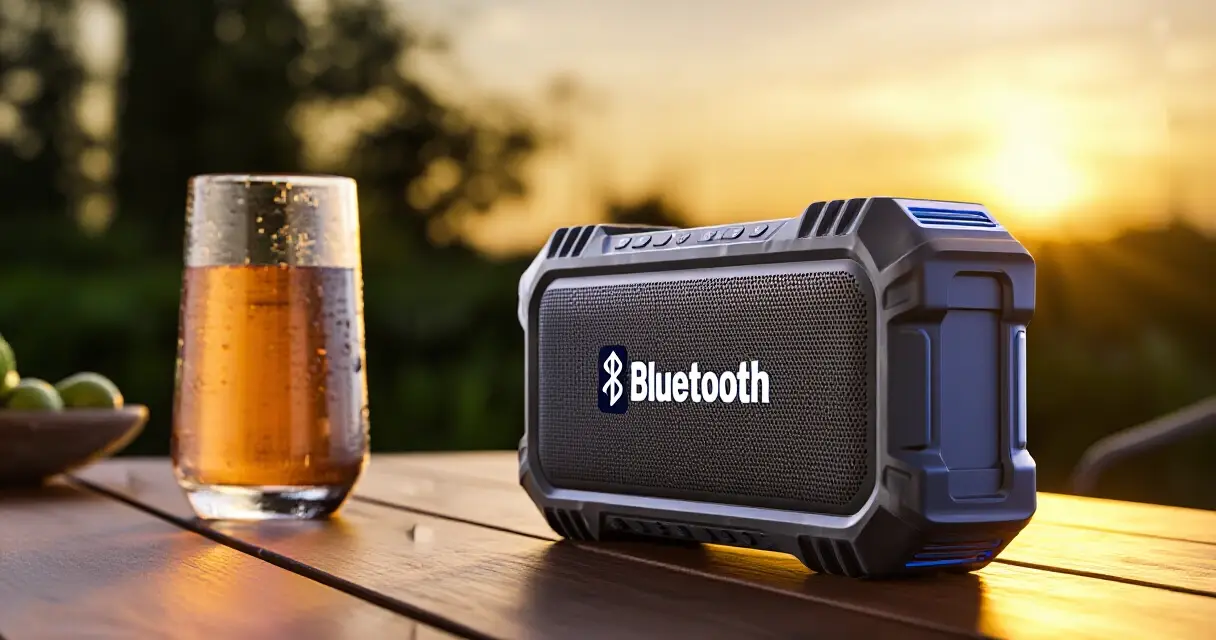
If you searched for the best portable Bluetooth speaker in September 2026 expecting a totally new flagship to headline the list, the honest answer is more nuanced: the standout release this cycle is a generational refinement, not a reinvention. The JBL Xtreme 5 is confirmed as the current, fifth-generation model in JBL’s large-format portable Bluetooth speaker line, and it anchors this guide because it represents the clearest example of what “new” actually means in portable audio right now — an evolved version of a proven platform rather than a category-redefining product. This article breaks down where the Xtreme 5 fits against the current portable and home audio landscape, what generational confirmation actually tells a buyer, and where the money genuinely goes as you move up the price ladder toward full home audio systems.
Direct answer: As of September 25, 2026, the JBL Xtreme 5 is the current fifth-generation model in JBL’s large portable Bluetooth speaker line, confirmed as the up-to-date version rather than a superseded predecessor. Exact U.S. retail pricing for the Xtreme 5 was not available in the sources reviewed for this article, so buyers should verify current pricing directly with JBL or a major U.S. retailer before purchasing. This guide places the Xtreme 5’s generational status in context alongside other confirmed-current products from September 2026 coverage, including the Cambridge Audio L/R X, the Technics SL-1200 55th Anniversary Edition, and the Sony WH-1000XM4C, to help readers understand what is actually new in audio right now versus what has simply been relisted at a discount.
Why Portable Speaker Shopping Got Confusing in 2026
Portable Bluetooth speakers have quietly become one of the most iterated product categories in consumer audio. Manufacturers refresh flagship lines every one to two years, often reusing chassis designs, color options, and marketing language across generations. That makes it genuinely difficult for a shopper doing a quick search to tell whether the listing in front of them is the current model or last year’s unit still sitting in retailer inventory at a discounted, but not actually competitive, price. This is precisely the problem this guide is built to solve: separating confirmed-current portable audio products from older stock, using only verifiable specification and pricing data rather than guesswork carried over from a previous product cycle.
The clearest confirmed example of this pattern in the current market is the JBL Xtreme 5, which September 2026 coverage explicitly identifies as the fifth generation of JBL’s large-format portable Bluetooth speaker line. That single confirmation matters more than it might seem, because it establishes a generational marker shoppers can use to cross-check any listing claiming to be the “latest” Xtreme. If a retailer is selling an Xtreme 3 or Xtreme 4 at a price close to what the current Xtreme 5 commands, that is a signal to keep shopping rather than a signal of a good deal.
JBL Xtreme 5: What We Know Is Confirmed Right Now
The JBL Xtreme 5 is documented in September 2026 sources as the current, fifth-generation version of JBL’s large portable Bluetooth speaker line. This confirms two things for buyers. First, that JBL has continued active development of this product line rather than discontinuing it in favor of a differently-branded replacement, which matters for long-term firmware support, companion app updates, and accessory compatibility. Second, that any Xtreme model numbered lower than five currently being sold at a discount is, by definition, a previous-generation unit rather than the current flagship, regardless of how a retailer chooses to market it.
What the available research does not confirm is exact U.S. retail pricing, battery life figures, driver configuration, or IP rating for the Xtreme 5 specifically. Rather than fabricate those figures to fill out a specifications table, this guide states plainly that shoppers should verify exact specifications and current U.S. pricing directly through JBL’s official product page or a major authorized retailer before making a purchase decision. This is a case where the generational status is well documented in current coverage, but granular spec-sheet detail requires a direct check at the point of sale rather than a secondhand summary.
How we know: JBL Xtreme 5 generational status is drawn from September 2026 portable audio coverage. Exact specifications and pricing were not confirmed in the sources reviewed for this article and should be verified with JBL directly before purchase.
The Broader September 2026 Speaker and Home Audio Landscape
Portable speakers don’t exist in a vacuum — shoppers comparing a large Bluetooth speaker against a compact home stereo pair, or against a soundbar system, benefit from understanding what else launched or refreshed this cycle. September 2026 brought a broader wave of hi-fi and home-theater arrivals, including new amplifier, receiver, and speaker releases across U.S.-priced coverage. That wave signals the audio industry’s product cycle is still actively moving through its third and fourth quarter launches rather than slowing down heading into the holiday season, which is worth knowing if you are trying to time a purchase around an expected price drop or a genuinely new release.
One of the more notable confirmed releases in this window is the Cambridge Audio L/R X, priced at US$2,399 / CA$3,499 / £1,799 / €1,999 as of early September 2026 coverage. While this sits in a different category and price bracket than a portable Bluetooth speaker, it’s a useful anchor point for understanding how far the current home audio market spans in a single month of releases — from sub-$300 portable units up through multi-thousand-dollar component systems aimed at dedicated listening rooms.
At the vinyl end of the spectrum, September 2026 also confirmed the Technics SL-1200 55th Anniversary Edition, a limited special edition capped at 12,000 units and priced from £1,099, alongside the Pro-Ject E1.2 BT, an updated 2026 model priced at £399/€399 in standard finish and £449/€449 in color finish. Neither is a portable speaker, but both illustrate the same pattern seen with the Xtreme 5: manufacturers are largely issuing refreshes, special editions, and line extensions this cycle rather than entirely new platform generations. Recognizing that pattern helps set realistic expectations before you start comparing spec sheets.
Current vs. Superseded: A Quick Reference Table
Because so much of the confusion in this category comes down to generation tracking, the table below consolidates confirmed-current products across the portable and home audio space as of September 25, 2026, built strictly from sourced data rather than estimation.
| Product | Category | Status (Sept. 2026) | Confirmed Price |
|---|---|---|---|
| JBL Xtreme 5 | Large portable Bluetooth speaker | Current, 5th generation | Not confirmed in sources — verify with JBL |
| Cambridge Audio L/R X | Home audio system | Current, newly priced Sept. 2026 | US$2,399 / CA$3,499 / £1,799 / €1,999 |
| Technics SL-1200 55th Anniversary Edition | Turntable | Current, limited to 12,000 units | From £1,099 |
| Pro-Ject E1.2 BT | Turntable | Current 2026 update to E1 line | £399/€399 (standard), £449/€449 (color) |
| Sony WH-1000XM4C | Headphones | Current refreshed XM4-family variant | £219 / $300 / AU$449.95 |
| Audio-Technica AT-LP70X | Turntable | Current, budget automatic class | $279 |
This table is not exhaustive of the entire audio market, but it does represent the specific set of products explicitly confirmed as current, with sourced pricing, in the research compiled for this guide as of the publication date. Readers should treat any product not listed here as unconfirmed rather than assume it is either current or outdated.
What Generational Confirmation Actually Tells You as a Buyer
Knowing that the Xtreme 5 is confirmed as the current fifth-generation model is useful, but it’s worth being explicit about what that confirmation does and doesn’t do for your buying decision.
- It tells you the product line is actively supported, which typically correlates with better warranty service, firmware and app support, and accessory availability over the life of the product.
- It does not tell you whether the price you’re seeing at a specific retailer reflects launch pricing, a genuine promotional discount, or inflated third-party markup — that requires checking multiple retailers directly before committing.
- It does not substitute for checking the specific unit’s driver configuration, battery life, IP rating, and companion app ecosystem, none of which were confirmed in the research behind this article and which can vary meaningfully even within a single product generation through regional SKUs.
- It is, however, a strong signal against buying old stock at a so-called “deal” price that isn’t actually a discount relative to the current generation’s real market price once you account for age and remaining support window.
Portable Speakers vs. Home Stereo: Which Fits Your Listening Habits?
A large portable Bluetooth speaker like the Xtreme 5 and a dedicated home stereo system solve genuinely different problems, and conflating them is a common shopping mistake that leads to buyer’s remorse either way. Portable speakers prioritize battery independence, ruggedness, and one-box convenience — you can move them between rooms, take them outside, or bring them to a gathering without any cabling or setup time. A home stereo system, by contrast, is built around fixed placement, stereo imaging, and — in the vinyl-listening context this site covers most closely — a signal chain that starts at a turntable and cartridge rather than a Bluetooth radio link compressing the source material.
If your listening is primarily background music while doing other things — cooking, working outside, hosting — a portable speaker’s convenience usually outweighs the audio quality ceiling it’s bound by, since casual listening rarely benefits from the extra resolution a stereo pair provides. If you’re building a listening room around a turntable and want the kind of stereo separation and detail retrieval vinyl rewards, a component stereo system remains the better investment, and no portable speaker at any price fully replicates that experience because of the physical constraints of a single enclosure. Readers building out a dedicated listening setup from scratch may find it useful to compare the full range of approaches in Best Home Stereo System for Music: Three Routes and What They Cost, which lays out three different budget paths into a proper stereo rig depending on how much control and fidelity you want.
Where Bluetooth Speakers Intersect With Vinyl Listening
It’s worth addressing directly: can a portable Bluetooth speaker like the Xtreme 5 be a legitimate output for a turntable setup? In practice, only indirectly. A large portable speaker accepts Bluetooth input, which means a turntable would need Bluetooth output capability of its own — something a growing number of current turntables now include as a standard feature rather than a premium add-on. For readers weighing that exact path, Best Bluetooth Turntables for 2026: Wireless Vinyl Without the Compromise covers which current turntables support wireless output cleanly, and pairing one of those with a large portable speaker is a genuinely workable casual-listening setup, even if it won’t match a wired phono-preamp-to-amplifier chain for fidelity or dynamic range.
For anyone starting completely from scratch and unsure whether a portable speaker, an all-in-one record player, or separate components make more sense as a first setup, Best Turntable for Beginners: What to Buy in 2026 (and What to Avoid) is the right starting point before layering in speaker decisions, since the turntable choice constrains what downstream audio gear will actually make sense.
Headphones as the Other Portable Audio Path
Portable speakers aren’t the only confirmed-current refresh in personal audio this cycle. The Sony WH-1000XM4C is documented as a current 2026 refreshed model in the XM4 family, offering 27 hours of battery life at a retail price of £219 / $300 / AU$449.95. That price point sits meaningfully below where Sony’s flagship noise-cancelling headphones typically land, suggesting this is a value-positioned variant rather than a new top-of-line model — the same refinement-over-reinvention pattern seen with the Xtreme 5 and with several of the turntables confirmed this cycle.
If noise-cancelling headphones are actually your priority over a speaker purchase, the fuller head-to-head comparison against Apple’s current earbuds is covered in Sony WH-1000XM4C vs AirPods 5: The 2026 ANC Headphone Buying Guide, which goes deeper on the tradeoffs between the two ecosystems, including battery life, case charging behavior, and platform lock-in considerations that matter for day-to-day use.
Turntable-Adjacent Releases Worth Tracking This Cycle
Because this site’s audience frequently shops across categories — a portable speaker one month, a turntable upgrade the next — it’s worth flagging the other confirmed-current releases from the same September 2026 window, even though they sit outside the portable speaker category proper.
| Product | Confirmed Price | Notable Detail |
|---|---|---|
| Audio-Technica AT-LP70X | $279 | Budget automatic turntable class |
| Audio-Technica AT-LP60XBT | $299 | Budget Bluetooth turntable class |
| Sony PS-LX5BT | £399 / €460 / AUD $599 | Bluetooth output built in |
| Audio-Technica AT-LP7X | £679 / €799 / $999 / AUD $1,799 | Higher-end belt-drive model |
| Argon Audio Aurora | €1,299 | Mid-tier turntable |
| Esoteric T-01 | £41,999 / $50,000 | Reference-grade turntable |
The spread here — from a $279 automatic deck up to a $50,000 reference turntable — underscores a point worth repeating throughout this guide: “current” and “expensive” are not the same thing. The Xtreme 5, the AT-LP70X, and the Esoteric T-01 are all confirmed-current products in their respective categories, at wildly different price points, and the right purchase depends entirely on your use case rather than chasing the newest label alone or assuming a higher price automatically means a better fit for your listening habits.
Cartridges and Signal Chain: The Upgrade Path Portable Speakers Can’t Replace
One recurring theme in reader questions is whether upgrading a portable speaker or upgrading a turntable’s cartridge delivers more audible improvement per dollar spent. These aren’t really competing upgrades — they serve entirely different signal chains — but if your primary listening is through a wired vinyl setup rather than Bluetooth, cartridge and stylus quality will typically have a larger effect on perceived detail and channel separation than swapping speakers within the same tier. Readers on that specific upgrade path should see Best Turntable Cartridge Upgrades for 2026: The Stylus Guide That Works for spec-led guidance on where that money is best spent relative to other upgrades in the chain.
Similarly, if the bottleneck in your current setup is amplification rather than the speaker or cartridge itself, Best Phono Preamps for 2026: Spec-Led Picks From $99 to $499 covers the specific component that sits between a turntable and everything downstream of it, and is often the most overlooked link in an otherwise well-chosen system.
Budget Tiers: Where Portable Speaker Money Actually Goes
Without confirmed exact pricing for the Xtreme 5 itself, this section focuses on the general budget logic that applies across the current portable and home audio market based on the confirmed price points gathered throughout this guide.
Entry Tier (Under $300)
At this tier, confirmed current products like the Audio-Technica AT-LP70X at $279 and AT-LP60XBT at $299 show that manufacturers are still actively refreshing budget-tier hardware rather than abandoning it to older stock once a flagship launches. The same logic likely applies to entry-level portable Bluetooth speakers, though exact current models at this specific price point weren’t confirmed in this research pass, so shoppers should apply the same generation-check principle used elsewhere in this guide.
Mid Tier ($300–$1,000)
This is where the Sony PS-LX5BT at £399/€460 and the Sony WH-1000XM4C at $300 sit, and it’s a tier where confirmed 2026 refreshes are common — buyers here benefit most from checking generational status carefully, since older and newer models frequently overlap in price during promotional periods, making the sticker price alone an unreliable signal of value.
Premium Tier ($1,000+)
The Cambridge Audio L/R X at $2,399 and the Technics SL-1200 55th Anniversary Edition from £1,099 represent this bracket. At this level, generational status matters less than whether a limited-edition run, like the Technics 12,000-unit cap, affects long-term resale value and support availability — a consideration unique to premium and special-edition hardware that doesn’t really apply to mainstream portable speakers.
Reading a Portable Speaker Spec Sheet Without Getting Misled
Because this guide intentionally avoids inventing figures for the Xtreme 5, it’s worth equipping readers with a general framework for evaluating whatever numbers a retailer or manufacturer does publish, so the confirmed facts in this article are actually useful when you go compare listings yourself.
- Battery life: Figures on spec sheets are almost always measured at a moderate, not maximum, volume level — real-world runtime at party volume is typically shorter, sometimes significantly so, than the advertised number.
- IP ratings: They communicate dust and water resistance as two separate digits — the first for dust, the second for water — and a speaker rated for splash resistance is not the same as one rated for full submersion, so check both digits rather than assuming a high IP rating covers every outdoor scenario.
- Wattage: Figures are frequently listed as peak output rather than continuous RMS output, which inflates the number without reflecting sustained real-world loudness, so two speakers with similar peak wattage can sound meaningfully different in continuous use.
- Bluetooth version: This matters less than most marketing implies for most listeners, since audible differences between adjacent Bluetooth generations are typically minor compared to driver quality and enclosure tuning — the version number affects connection stability and range more than perceived audio quality.
- Multi-speaker pairing: Stereo or party-mode claims are only meaningful if you actually plan to buy two units, and marketing copy rarely makes clear whether that feature works across different generations of the same product line or only within a single generation.
Armed with that framework, the confirmed facts in this guide — the Xtreme 5’s generation status, the Cambridge Audio L/R X’s exact pricing, the Technics anniversary edition’s unit cap, and the Sony WH-1000XM4C’s battery life figure — become genuinely actionable rather than just a list of numbers, because you know which claims to weigh heavily and which to verify further before treating them as a deciding factor in a purchase.
Limitations of This Guide
In the interest of transparency: this guide does not include confirmed battery life, wattage, IP rating, or exact U.S. pricing for the JBL Xtreme 5 itself, because that data was not available in the sources reviewed for this article. We have not personally tested any of the products referenced here — all specifications and prices are drawn from September 2026 published coverage as cited throughout. Readers should treat the Xtreme 5’s generational confirmation as reliable while verifying granular specs and current pricing directly with JBL or an authorized retailer before purchase. This guide also does not cover every portable speaker on the market — it focuses specifically on products with confirmed, sourced current-generation status as of the publication date, and intentionally excludes speculative or rumored releases that have not yet been confirmed by named sources.
Frequently Asked Questions
Is the JBL Xtreme 5 the newest model in the Xtreme line?
Yes. September 2026 coverage confirms the Xtreme 5 as the current fifth-generation model in JBL’s large portable Bluetooth speaker line, making any lower-numbered Xtreme model a previous generation by definition, regardless of how it’s marketed at retail.
How much does the JBL Xtreme 5 cost in the United States?
Exact U.S. retail pricing was not confirmed in the sources used for this article. Check JBL’s official site or an authorized U.S. retailer for current pricing before purchasing, and compare against at least one additional retailer to confirm the price reflects current-generation stock.
Can I use a portable Bluetooth speaker with a turntable?
Yes, provided the turntable has Bluetooth output. Several current turntables, including the Sony PS-LX5BT, support this natively. It’s a workable casual setup, though it won’t match a wired connection through a dedicated amplifier for fidelity, dynamic range, or channel separation.
Should I buy a portable speaker or a home stereo system for vinyl listening?
That depends on your priority. If convenience and mobility matter most, a portable Bluetooth speaker paired with a Bluetooth-capable turntable is a reasonable casual setup. If fidelity and stereo imaging matter most, a dedicated home stereo system remains the better long-term investment.
Are older JBL Xtreme models still worth buying at a discount?
It depends entirely on the discount relative to the confirmed current Xtreme 5, and on whether ongoing firmware and app support matter to you. A steep discount on genuinely older stock can still be a reasonable buy for casual use, but it should not be priced close to current-generation hardware.
Related Reading
See Also
- Best Home Stereo System for Music: Three Routes and What They Cost
- Best Bluetooth Turntables for 2026: Wireless Vinyl Without the Compromise
- Best Turntable for Beginners: What to Buy in 2026 (and What to Avoid)
- Sony WH-1000XM4C vs AirPods 5: The 2026 ANC Headphone Buying Guide
- Best Turntable Cartridge Upgrades for 2026: The Stylus Guide That Works
- Best Phono Preamps for 2026: Spec-Led Picks From $99 to $499
- New Turntables for Late 2026: What’s Actually New vs. Rebadged
Conclusion: Buy for Confirmed Status, Not Marketing Language
The single most useful takeaway from the September 2026 portable audio market is that “new” rarely means an entirely new platform — it usually means a confirmed generational refresh, a special edition, or a value-repositioned variant of an existing line. The JBL Xtreme 5 fits this pattern exactly: a confirmed fifth-generation model, actively current, but part of a continuum rather than a reinvention. The same is true of the Technics SL-1200 55th Anniversary Edition, the Pro-Ject E1.2 BT, and the Sony WH-1000XM4C. For shoppers, the actionable habit this guide leaves you with is simple: before buying any “latest” portable speaker, headphone, or turntable, confirm its generation number and cross-check current pricing directly with the manufacturer or an authorized retailer, rather than trusting a listing’s marketing language alone. That single check will save more money than any single spec comparison, because it protects you from paying current-generation prices for previous-generation hardware.