Summary
The best all-in-one record player belongs to the most criticised category in audio, and the best-selling one. Both facts are earned. The cheap ones deserve the criticism; a small number are genuinely good, and telling them apart comes down to...
Table of Contents
- 1 The short answer
- 2 The four things that separate good from bad
- 3 The best all-in-one record players
- 3.1 Angels Horn H019 — the one to buy
- 3.2 Victrola Eastwood — the budget pick
- 3.3 Andover SpinDeck 2 — the upper limit
- 4 When to buy separates instead
- 5 Common questions
- 5.1 Do all-in-one players damage records?
- 5.2 Can I add external speakers later?
- 5.3 Why do vinyl forums dislike these so much?
- 5.4 Is Bluetooth output useful?
- 6 Where to start
The best all-in-one record player belongs to the most criticised category in audio, and the best-selling one. Both facts are earned. The cheap ones deserve the criticism; a small number are genuinely good, and telling them apart comes down to four specifications.
This guide covers which all-in-ones are worth buying in 2026, what to check before ordering, and when to buy separates instead.
The short answer
- Best overall: Angels Horn H019 — around $240, and Wirecutter reviewed it favourably, which is rare for the category.
- Best budget: Victrola Eastwood — around $130, with a replaceable Audio-Technica cartridge.
- Best with a remote: 1 by ONE fully automatic — plays and repeats without you touching it.
- Avoid: anything under $80 with a carry handle. Sealed cartridge, heavy tracking, and it wears records.
The four things that separate good from bad
Check these four before anything else. A unit that passes all four is worth considering regardless of brand; one that fails two is not worth its price whatever the reviews say.
- A replaceable cartridge. If the stylus cannot be changed, the unit is disposable in about a year of regular use.
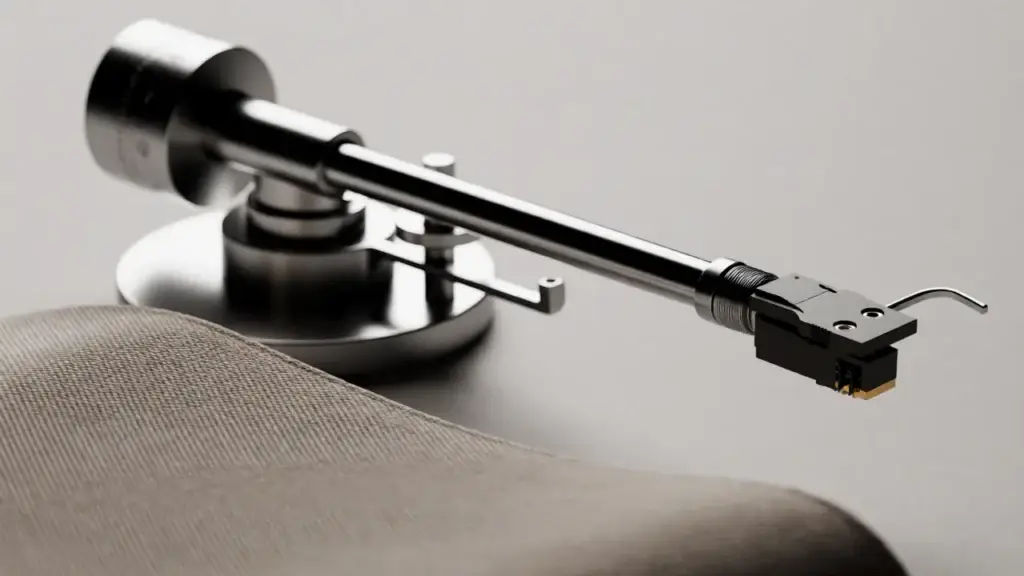
- An adjustable counterweight. Fixed-weight tonearms usually track at 4–5g. Anything above about 3g wears the groove. Our setup guide covers setting it correctly.
- Belt drive, not a gear-driven motor. Belt drive isolates motor noise, which matters much more when the speakers are 20cm from the platter.
- A line-out socket. This is the escape hatch. With line-out, you can connect real speakers later and keep the turntable. Without it, you are replacing the whole thing.
The best all-in-one record players
| Model | Approx. price | Cartridge | Counterweight | Line-out |
|---|---|---|---|---|
| Angels Horn H019 | $240 | Audio-Technica, replaceable | Yes | Yes |
| Victrola Eastwood | $130 | Audio-Technica, replaceable | Yes | Yes |
| 1 by ONE automatic | $200 | Replaceable | Yes | Yes |
| Andover SpinDeck 2 | $400 | Ortofon OM5e | Yes | Yes |
| Suitcase players | $60–80 | Sealed ceramic | No | Rarely |
Angels Horn H019 — the one to buy
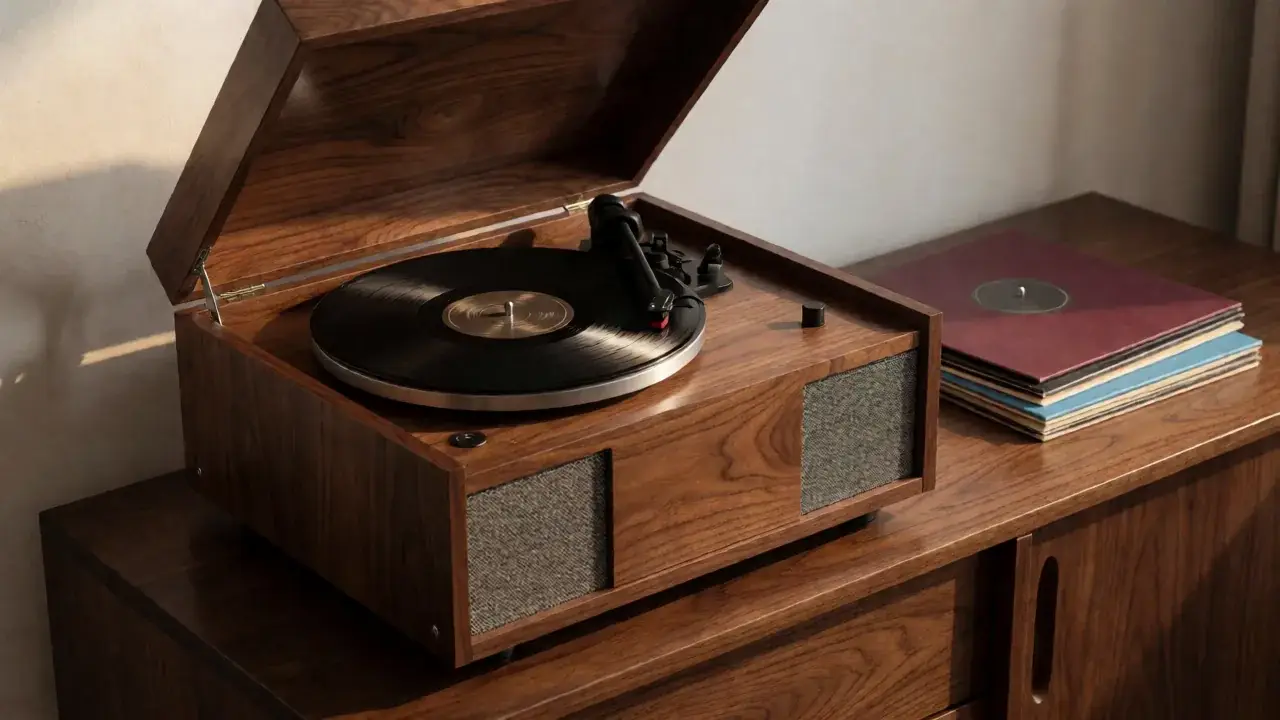
Around $240. It passes all four checks, and the wooden plinth does real work: mass and rigidity damp the vibration that speakers in the same cabinet inevitably produce.
The built-in speakers are the part that surprises people. They are not merely acceptable for the category — they are pleasant to listen to, which is not true of most rivals at twice the price.
Victrola Eastwood — the budget pick
Around $130. Victrola built its reputation on the cheap suitcase players this guide warns against, and the Eastwood is the company’s answer to that reputation: proper cartridge, adjustable counterweight, Bluetooth both ways.
It is not as good as the Angels Horn. It is also $110 cheaper and it will not damage your records, which is the important threshold.
Andover SpinDeck 2 — the upper limit
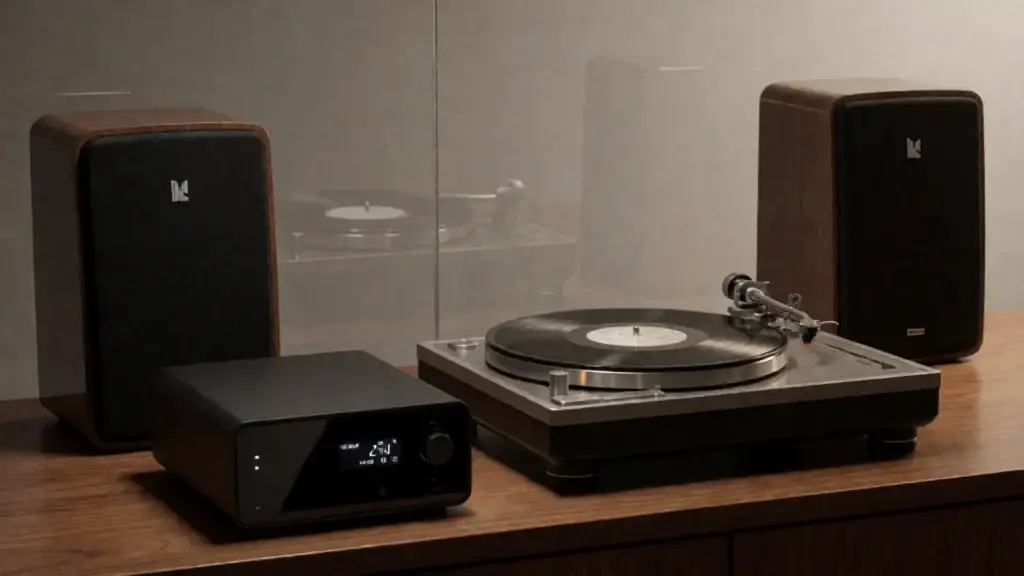
Around $400, with an Ortofon OM5e cartridge. At this price the argument for an all-in-one gets weaker — $400 buys a good turntable and decent powered speakers separately, and that combination will sound better. Our turntable and speaker packages guide shows what $370 to $850 assembles. Buy the SpinDeck if you specifically want one object.
When to buy separates instead
The honest threshold is around $250. Below it, a good all-in-one beats what you could assemble from parts. Above it, separates win, and the gap widens quickly — our beginner turntable guide covers the decks worth pairing with real speakers.
The reason is physics rather than snobbery. Two speakers a metre and a half apart produce a stereo image; two speakers 25cm apart in the same box as a vibrating platter cannot. No amount of engineering closes that gap.
That said, a record player that gets used beats a better system that felt like too much effort. If one box is what you will actually live with, buy one box.
Common questions
Do all-in-one players damage records?
The cheap ones do, gradually, through excessive tracking force and a stylus that cannot be replaced. Models with an adjustable counterweight and a proper cartridge — everything recommended above — do not.
Can I add external speakers later?
Only if it has line-out or Bluetooth output. That is why line-out is on the four-point checklist — it is the difference between an upgrade path and a replacement.
Why do vinyl forums dislike these so much?
Because the category was defined for a decade by genuinely record-damaging products sold in gift shops, and that reputation transferred to everything with built-in speakers. The criticism is deserved for the bottom of the market and unfair to the models above.
Is Bluetooth output useful?
Yes — it lets you send the signal to a better speaker you already own, which is the cheapest possible upgrade. It compresses the audio slightly; a Bluetooth speaker you own beats stereo speakers you have not bought.
Prices checked 27 July 2026 and shown in USD. Street prices move often — treat them as a guide, not a quote.
Where to start
Buy the Angels Horn H019 at around $240 if the budget allows, or the Victrola Eastwood at $130 if it does not. Both protect your records, which is the line that matters.
If you have room for two speakers, read our comparison of all-in-ones and separates first — the separates route costs a little more and sounds considerably better.