Summary
The question every DJ setup for beginners starts with is which gear to buy. The more useful question is which of three setups you want to learn on, because they teach different skills and only one of them is cheap....
Table of Contents
- 1 The short answer
- 2 Three routes to a DJ setup for beginners
- 2.1 Controller and laptop — the honest recommendation
- 2.2 Standalone — buy this second, not first
- 2.3 Turntables — only if vinyl is the point
- 3 What else you actually need
- 4 A realistic first budget
- 5 Common questions
- 5.1 Do I need to learn on vinyl to be a real DJ?
- 5.2 Is sync cheating?
- 5.3 rekordbox or Serato?
- 5.4 Can I use headphones instead of speakers?
- 6 Where to start
The question every DJ setup for beginners starts with is which gear to buy. The more useful question is which of three setups you want to learn on, because they teach different skills and only one of them is cheap.
This guide covers all three, what a working setup costs in 2026, and what you can skip.
The short answer
- Start here: a controller plus a laptop. The Pioneer DDJ-FLX4 is around $329 and is what most people are recommended, for good reason.
- If you want no laptop: a standalone unit like the Numark Mixstream Pro+, around $630.
- If you want vinyl: two direct-drive turntables and a mixer, realistically $1,000 and up.
- Do not skip: headphones you can hear a cue in, and speakers you can hear the mix on.
Three routes to a DJ setup for beginners
| Setup | What it is | Entry cost | Best for |
|---|---|---|---|
| Controller + laptop | One unit, software does the work | $250–$400 | Almost everyone starting out |
| Standalone | Screen and drives built in, no computer | $630–$1,200 | Playing out, no laptop on stage |
| Turntables + mixer | Two decks, vinyl or timecode | $1,000+ | Scratching and vinyl culture |
Controller and laptop — the honest recommendation
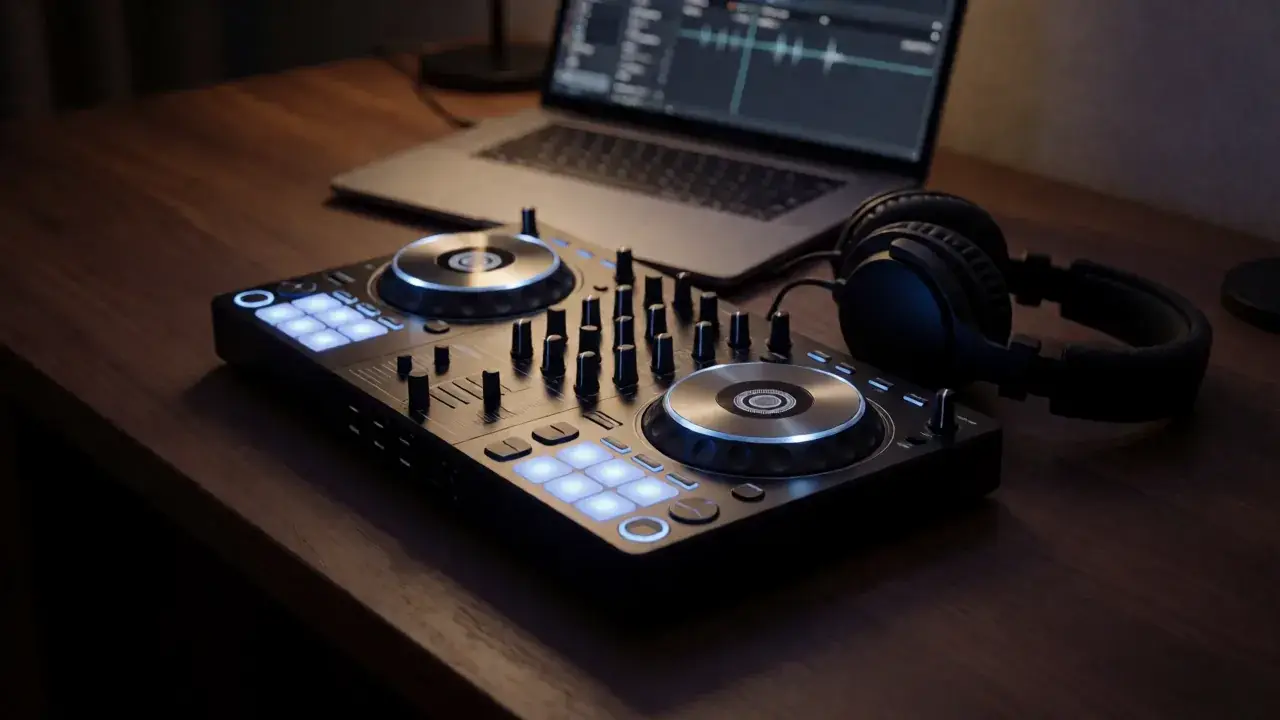
A controller is two jog wheels, a mixer section and a pile of buttons, connected by USB to software that holds your music. The DDJ-FLX4 ships with a licensed copy of rekordbox and Serato Lite, so there is nothing else to buy.
Everything you need to learn — beatmatching, phrasing, EQ, reading a crowd — is learnable here. The gear is not what makes a set good, and a $2,000 setup will not disguise poor track selection.
Standalone — buy this second, not first
Standalone units run their own software, read from USB sticks, and need no computer. That matters when you are playing out, where a laptop is one more thing to fail on a wet stage.
It is twice the money for convenience rather than capability. Worth it when you have gigs; not worth it while you are learning in a bedroom.
Turntables — only if vinyl is the point
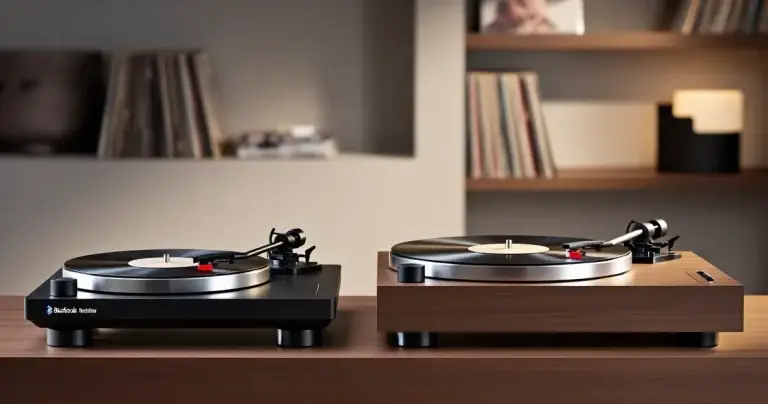
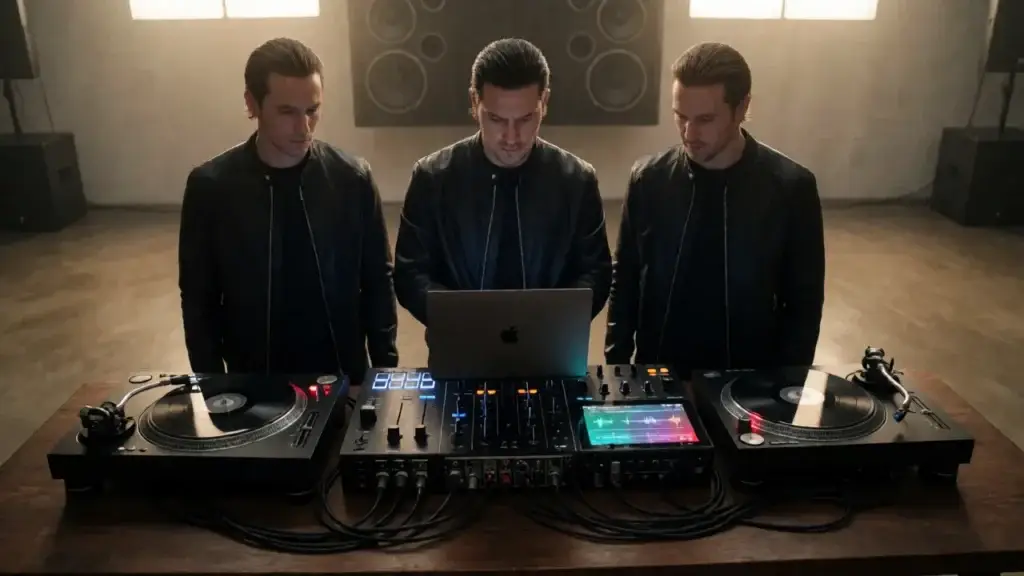
Two direct-drive decks and a mixer. Direct drive is non-negotiable here: belt drive cannot take a hand on the platter, which is the whole technique.
The Pioneer PLX-500 at around $399 each is the usual starting point, so two decks plus a mixer lands near $1,000. It is the hardest route and the only one that teaches scratching properly. It also appears in our turntables under $500 roundup, if you want it to double as a listening deck.
What else you actually need
- Headphones with decent isolation ($80–$150) — you cue the next track against a loud room. Open-back headphones cannot do this job.
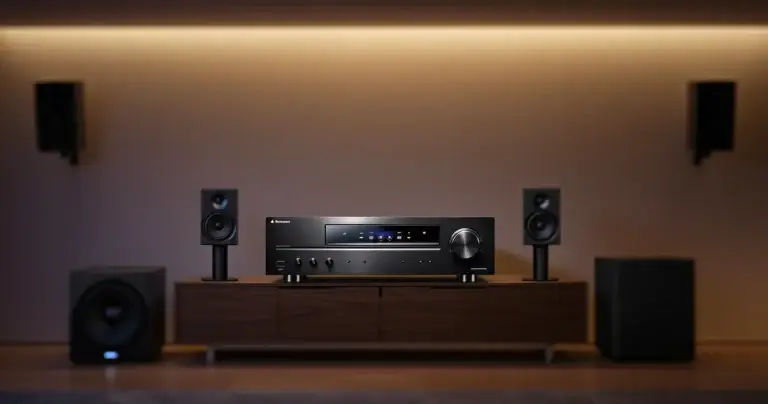
- Speakers you trust ($150–$400) — a mix that sounds good on honest speakers sounds good everywhere. One that sounds good on bass-heavy ones does not. Our active speakers guide covers powered pairs at that budget.
- Music you own — streaming integration exists and it drops out. Local files do not.
What you can skip at the start: a sound card (the controller has one), a laptop stand, and any controller with more than four channels. You will not use them.
A realistic first budget
| Item | Cost |
|---|---|
| Pioneer DDJ-FLX4 controller | $329 |
| Closed-back DJ headphones | $100 |
| Powered monitors (pair) | $200 |
| Total | ~$630 |
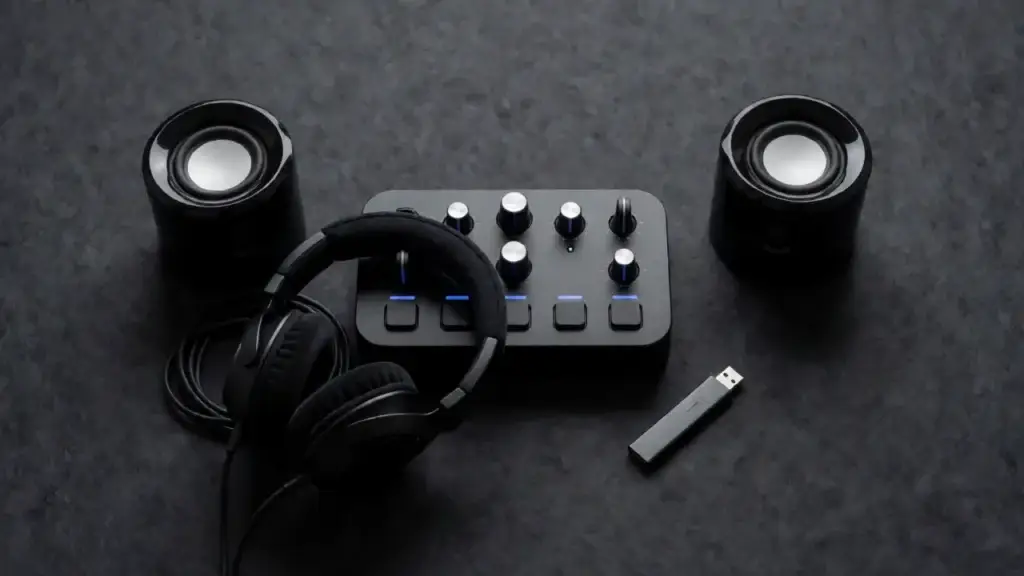
If that is beyond reach, halve it: use headphones you already own, skip the speakers initially, and buy a used DDJ-400 — mechanically the same as the FLX4 and often around $150 secondhand.
Common questions
Do I need to learn on vinyl to be a real DJ?
No, and this argument has been running for twenty years. Vinyl teaches a physical relationship with the music that controllers do not, which is a genuine point. It is also expensive, heavy, and irrelevant to most paid work. Learn on a controller; add turntables if the craft appeals.
Is sync cheating?
Learn to beatmatch by ear anyway. Not because sync is dishonest, but because it fails on live recordings and tracks with drifting tempo, and because hearing when two records are out is the skill underneath everything else. Then use sync freely.
rekordbox or Serato?
Whichever came with your controller. They do the same things with different layouts, and the free tiers are enough for a long time. Switching later is annoying but not difficult.
Can I use headphones instead of speakers?
To start, yes. But mixing entirely on headphones teaches you a bass balance that does not survive contact with a room, so get speakers before you play for anyone.
Prices checked 27 July 2026 and shown in USD. Street prices move often — treat them as a guide, not a quote.
Where to start
Buy a DDJ-FLX4 and closed-back headphones. Learn to beatmatch by ear on two tracks you know intimately. Add speakers when you can. Everything else is a later problem.
Going the vinyl route? Our guide to DJ turntables for beginners covers the decks worth buying.