Summary
✓Reviewed by David Chen Two of the most significant new turntable launches of 2026 landed in completely different price brackets, and that makes them easy to confuse when you are just trying to figure out which one to buy. The...
Table of Contents
- 1 Direct answer: which new 2026 turntable should you buy?
- 2 Why these two launches matter right now
- 3 Sony PS-LX3BT: what you get at the budget Bluetooth price point
- 3.1 Who the PS-LX3BT is actually for
- 4 Audio-Technica AT-LP7X: what the mid-priced 2026 flagship-adjacent deck offers
- 4.1 Who the AT-LP7X is actually for
- 5 Price and positioning compared
- 6 Where a Technics rival fits into the conversation
- 7 Bluetooth convenience versus wired fidelity: the real trade-off
- 8 What “new for 2026” actually means for these two models
- 9 How the entry-level tier below these two compares
- 10 Building out the rest of your system around either turntable
- 11 Premium context: how far the high end has moved in 2026
- 12 What this comparison does not cover
- 13 Bottom line: matching the turntable to the buyer, not the other way around
- 13.1 Related Reading
- 14 References
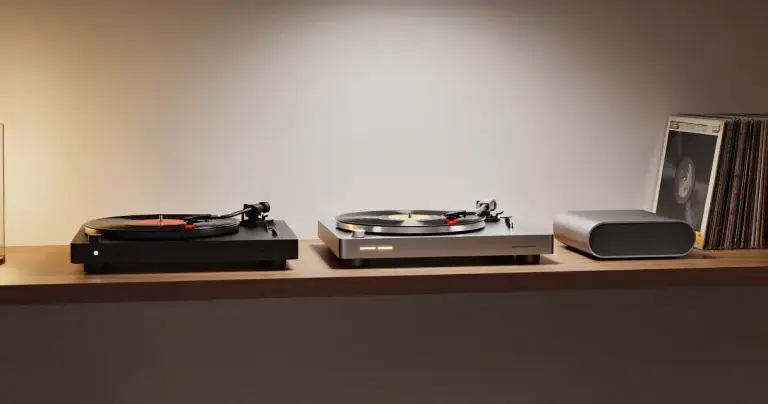
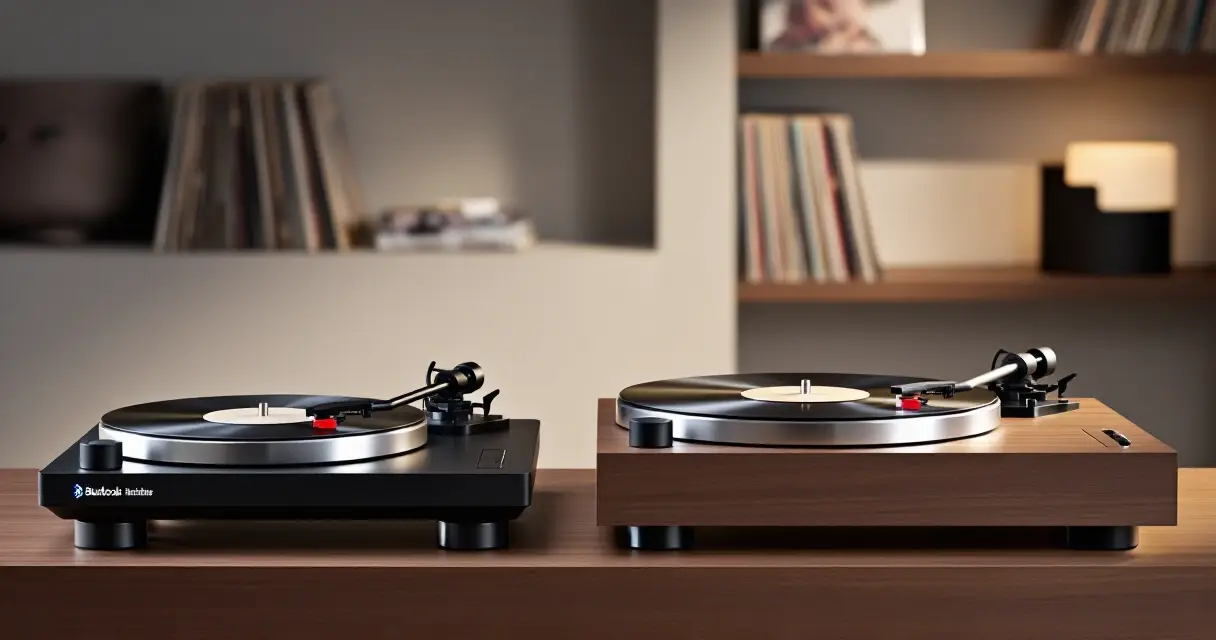
Two of the most significant new turntable launches of 2026 landed in completely different price brackets, and that makes them easy to confuse when you are just trying to figure out which one to buy. The Sony PS-LX3BT is a budget Bluetooth turntable tested at £299 / $400 / AU$469, while the Audio-Technica AT-LP7X is a mid-priced, wired-first deck launched at CES 2026 for £679 / €799 / $999. This guide lines up the specifications, the pricing, and the trade-offs each one asks you to accept, using only what has actually been published about each model as of September 30, 2026.
Direct answer: which new 2026 turntable should you buy?
If your budget tops out around $400 and you want simple Bluetooth streaming to a soundbar or powered speakers, the Sony PS-LX3BT is the newer and more relevant option in that price band, having entered What Hi-Fi?’s Bluetooth turntable recommendations in April 2026. If you have close to $1,000 to spend and want a wired, hi-fi-grade turntable with room to grow into a proper amplifier and speaker system, the Audio-Technica AT-LP7X — announced at CES 2026 — is the newer flagship-adjacent option in Audio-Technica’s current lineup, sitting above the older AT-LP5X and below the AT-LP8X. Neither turntable is a stripped-down version of the other; they are aimed at different buyers, and the right pick depends entirely on which price tier and use case actually matches your listening setup.
Why these two launches matter right now
Turntable buying guides tend to recycle the same handful of models year after year, which is exactly why these two launches are worth separating from the noise. Sony’s return to turntable production has been one of the more closely watched developments in home audio, and the PS-LX3BT and PS-LX5BT mark the company’s newest affordable Bluetooth decks, replacing older Sony Bluetooth turntable recommendations that no longer represent the newest options in that catalog. On the other side of the market, Audio-Technica’s AT-LP7X is one of the most important fresh launches in the mid-priced turntable space this year, giving the brand’s line a genuinely new model between the budget AT-LP5X and the higher-end AT-LP8X rather than another repackaged variant.
That distinction — genuinely new engineering versus a repackaged older design — is worth caring about, because the turntable market has a well-documented habit of rebadging older chassis under new model numbers. Both of the turntables in this comparison represent real, current-generation launches rather than reheated leftovers, which is part of why they are worth evaluating on their own merits rather than lumping them in with older stock still sitting on retailer shelves.
Sony PS-LX3BT: what you get at the budget Bluetooth price point
The Sony PS-LX3BT is a new 2026 budget Bluetooth turntable, tested at £299 / $400 / AU$469, and it entered What Hi-Fi?’s Bluetooth turntable recommendations in April 2026. It sits below the PS-LX5BT, the higher Sony Bluetooth model that launched alongside it in 2026 at £399 / $500 / AU$599. The pairing gives Sony two current tiers in the affordable wireless turntable category, both of which are newer than the Sony Bluetooth turntable recommendations that preceded them.
Who the PS-LX3BT is actually for
This is a turntable built around convenience first. Bluetooth streaming to a soundbar, a pair of powered bookshelf speakers, or a Bluetooth receiver means you can start playing records without running phono cables across a room or buying a separate phono preamp. That simplicity is exactly what makes a budget Bluetooth turntable appealing to a first-time vinyl buyer, but it is worth being clear-eyed about the trade-off: Bluetooth audio compresses the signal, so listeners chasing the last word in fidelity from their pressings will hear a difference compared with a wired connection into a proper phono stage. For casual listening, background music, and apartment setups where running cables is impractical, that trade-off is usually worth it.
Audio-Technica AT-LP7X: what the mid-priced 2026 flagship-adjacent deck offers
The Audio-Technica AT-LP7X is a new 2026 turntable announced at CES 2026 and available from launch at £679 / €799 / $999. It replaces the AT-LP5X as the brand’s more current mid-tier option — the AT-LP5X is explicitly described as much older and priced around £299 / $649, positioning the AT-LP7X as a genuinely new step up rather than a like-for-like refresh. Above the AT-LP7X sits the AT-LP8X, the higher direct-drive model in the same family, priced at £859 / $1299 / AU$2,199.
Who the AT-LP7X is actually for
At roughly $999, the AT-LP7X is aimed at a buyer who already has, or is planning to build, a proper amplifier-and-speaker system and wants a turntable that can be a long-term centerpiece rather than a starter deck. This is not an impulse purchase in the way a $400 Bluetooth turntable can be — it is a considered investment into a wired hi-fi chain, and it makes the most sense for listeners who have already outgrown all-in-one or Bluetooth-first setups and want more headroom for cartridge upgrades and finer setup adjustments down the line.
Price and positioning compared
The gap between these two turntables is not incremental — it is a gap of roughly $600 at U.S. pricing, which puts them in entirely different shopping categories even though both are described as new 2026 launches. The table below lines up the two models against their closest current siblings for context.
| Model | US Price (launch) | UK Price | Connection type | Positioning |
|---|---|---|---|---|
| Sony PS-LX3BT | $400 | £299 | Bluetooth | Budget wireless entry |
| Sony PS-LX5BT | $500 | £399 | Bluetooth | Step-up wireless tier |
| Audio-Technica AT-LP5X | $649 | £299 | Wired | Older, superseded mid-tier |
| Audio-Technica AT-LP7X | $999 | £679 / €799 | Wired | New mid-priced flagship-adjacent |
| Audio-Technica AT-LP8X | $1,299 | £859 | Wired, direct-drive | Higher-tier in the same family |
How we know: figures are drawn from What Hi-Fi?’s 2026 turntable coverage, including its dedicated pricing for the PS-LX3BT, PS-LX5BT, AT-LP5X, AT-LP7X, and AT-LP8X.
Where a Technics rival fits into the conversation
Neither Sony nor Audio-Technica has this price territory to themselves. The Technics SL-40CBT is a current rival sitting in the same price band as the AT-LP7X, priced at £749 / $899 / AU$1,299, and it includes both Bluetooth streaming and a built-in phono stage — effectively offering the wireless convenience of the Sony models alongside the wired flexibility associated with the Audio-Technica tier. Shoppers cross-shopping the AT-LP7X should be aware the SL-40CBT exists in almost exactly the same price window, with the added flexibility of Bluetooth output that the AT-LP7X does not prioritize in the same way.
For buyers who want a Pro-Ject alternative in a similar bracket, the Pro-Ject Debut Evo 2 is listed at £599 / $699 / AU$1,299, undercutting the AT-LP7X while still sitting in wired hi-fi turntable territory. Pro-Ject’s other notable 2026 move is at the entry-to-mid tier: the Debut Pro was updated with a longer tonearm and an aluminium sub-platter, making the current version of that model a genuine spec upgrade over earlier Debut Pro-era configurations rather than a cosmetic refresh.
| Model | US Price | Connection | Notable spec |
|---|---|---|---|
| Technics SL-40CBT | $899 | Bluetooth + wired (built-in phono stage) | Direct AT-LP7X price rival with wireless option |
| Pro-Ject Debut Evo 2 | $699 | Wired | Undercuts AT-LP7X by roughly $300 |
| Pro-Ject Debut Pro (updated) | Not stated | Wired | Longer tonearm, aluminium sub-platter |
How we know: pricing and spec details for the Technics SL-40CBT and Pro-Ject Debut Evo 2 / Debut Pro come from What Hi-Fi?’s 2026 turntable guide.
Bluetooth convenience versus wired fidelity: the real trade-off
The single biggest difference between the Sony PS-LX3BT/PS-LX5BT pair and the Audio-Technica AT-LP7X is not build quality or price alone — it is the fundamental signal path. Bluetooth turntables compress audio before it reaches your speakers, which is a reasonable trade for convenience but a real one for anyone comparing against a wired connection into a dedicated phono stage and amplifier. The AT-LP7X, by contrast, is built around the assumption that you already have, or want to build, a wired hi-fi chain capable of showing what a lossless connection can do.
This is why the two turntables in this comparison are not really competitors in the traditional sense — a shopper choosing between them has usually already decided whether Bluetooth convenience or wired fidelity matters more, and the decision cascades from there. If you are still undecided on that question, it is worth reading a dedicated Bluetooth turntable comparison before committing to either camp, since the wireless category has its own separate shortlist of current models worth checking against the Sony pair specifically.
What “new for 2026” actually means for these two models
Both turntables earn the “new” label in different ways. The Sony PS-LX3BT and PS-LX5BT are new because Sony’s return to turntable production is itself a recent development, and these models entered What Hi-Fi?’s Bluetooth turntable guide in April 2026 — meaning they are newer than the Sony Bluetooth decks that preceded them in that same guide. The Audio-Technica AT-LP7X is new because it was announced at CES 2026 and fills a genuine gap in the brand’s lineup between the older AT-LP5X and the pricier AT-LP8X, rather than simply relabeling an existing chassis.
That distinction matters because the turntable market in late 2026 has seen plenty of “new” model numbers that turned out to be existing designs with different badges or minor cosmetic changes. Both models covered here represent real changes to their respective lineups — Sony adding a genuinely new affordable Bluetooth tier, and Audio-Technica adding a genuinely new mid-priced wired tier — which is part of why they were worth a dedicated comparison rather than folding them into a broader roundup.
How the entry-level tier below these two compares
Not every buyer needs to spend $400 to $1,000 on a first or second turntable. If your budget sits below the Sony PS-LX3BT’s $400 starting point, it is worth comparing against the broader field of entry-level turntables before committing to either Sony Bluetooth model, since the beginner tier has its own set of trade-offs around cartridge quality, platter materials, and build consistency that a $400 price point does not automatically solve. Similarly, if $999 for the AT-LP7X feels like a stretch, the sub-$500 wired turntable category has matured enough that the extra money buys specific, identifiable upgrades rather than vague quality improvements — worth understanding before assuming you need to spend AT-LP7X money to get a “real” wired turntable.
Building out the rest of your system around either turntable
Neither of these turntables is meant to be a closed, self-contained system. The Sony PS-LX3BT and PS-LX5BT are designed to pair with a Bluetooth speaker, soundbar, or receiver you may already own, while the AT-LP7X assumes a wired amplifier and speaker pairing downstream. If you are starting from scratch on the amplifier side, it is worth understanding the three general routes to a home stereo system for music — an all-in-one system, a stereo receiver plus passive speakers, or a separates-based hi-fi chain — since the AT-LP7X in particular only shows its value fully once it is feeding a capable amplifier and speaker pair rather than a budget all-in-one setup.
For listeners who already own a turntable and are trying to decide whether a new deck or a cartridge upgrade is the better next move, it is also worth noting that neither the PS-LX3BT nor the AT-LP7X launch changes the calculus around stylus and cartridge upgrades on existing equipment — that remains a separate, and often cheaper, way to improve sound quality without replacing the whole turntable.
Premium context: how far the high end has moved in 2026
It is worth noting, for context, just how much headroom exists above both of these turntables. What Hi-Fi?’s updated premium turntable guide notes a deck originally tested at £18,670 had risen to £32,500 by 2026, illustrating significant price inflation at the very top of the vinyl equipment market. In the same guide, the Naia is listed at £13,125 / $16,995 / AU$27,499 with a cartridge included, versus £18,999 / $24,699 / AU$34,999 for a configuration that requires a separate cartridge purchase. Against that backdrop, the $400–$1,000 range covered by the Sony and Audio-Technica launches in this comparison represents accessible, mainstream turntable shopping rather than enthusiast-tier spending — a useful reminder that neither of these models is trying to compete with true high-end audio.
What this comparison does not cover
This guide is built from published specifications and pricing rather than first-hand listening sessions with either the Sony PS-LX3BT or the Audio-Technica AT-LP7X, so it cannot speak to subjective sound-quality differences beyond what the source reviews describe. It also does not cover long-term reliability, since both models are new enough in 2026 that multi-year ownership data does not yet exist. Buyers making a final decision should weigh this specification and pricing comparison alongside hands-on impressions from a retailer demo or a full review where available.
Bottom line: matching the turntable to the buyer, not the other way around
The Sony PS-LX3BT and the Audio-Technica AT-LP7X are both genuine 2026 launches, but they are not really rivals — they are answers to two different questions. The PS-LX3BT answers “how do I start playing vinyl through speakers I already own, without extra cables or a phono preamp, for around $400?” The AT-LP7X answers “how do I get a wired, upgrade-ready turntable that will anchor a proper hi-fi system for the next several years, for around $1,000?” Buyers who start by answering that underlying question first will find the choice between these two 2026 launches becomes far easier than comparing spec sheets in isolation.
Related Reading
- Best Bluetooth Turntables 2026: Wireless Vinyl Playback Compared
- Best Turntable for Beginners: What to Buy in 2026 (and What to Avoid)
- Best Turntable Under $500: What the Extra Money Buys (2026)
- Best Home Stereo System for Music: Three Routes and What They Cost
- Best Integrated Amplifiers 2026: Marantz, Naim, Cambridge Compared
- Best Record Player with Speakers: All-in-One vs Separates (2026)
References
- What Hi-Fi? — 2026 turntable coverage and pricing guides
- Sony official site
- Audio-Technica official site
- Technics official site
- Pro-Ject Audio Systems official site
Honesty note: This comparison is based on published manufacturer pricing and specifications and third-party reporting from What Hi-Fi? as of September 30, 2026. No first-hand testing of the Sony PS-LX3BT, PS-LX5BT, or Audio-Technica AT-LP7X was conducted for this article — all sound-quality characterizations are general category trade-offs (Bluetooth compression versus wired connections), not model-specific listening impressions.