Summary
The best DJ turntables for beginners are a different machine from a listening turntable, though they look alike. Buying the wrong one is the most common mistake at this stage, and the specification that separates them is not on most...
Table of Contents
- 1 The short answer
- 2 Why direct drive is non-negotiable
- 3 What else to look for
- 4 The best DJ turntables for beginners
- 4.1 Pioneer DJ PLX-500 — the usual first deck
- 4.2 Audio-Technica AT-LP120XUSB — cheaper, nearly as capable
- 4.3 Technics SL-1200 — the reference, and the cost
- 5 What two decks actually cost
- 6 Common questions
- 6.1 Can I DJ with one turntable?
- 6.2 What about timecode vinyl?
- 6.3 Are used Technics worth buying?
- 6.4 Do I need a special cartridge?
- 7 Where to start
The best DJ turntables for beginners are a different machine from a listening turntable, though they look alike. Buying the wrong one is the most common mistake at this stage, and the specification that separates them is not on most product pages.
This guide covers what makes a turntable suitable for DJing, which decks are worth buying, and what a working two-deck setup actually costs.
The short answer
- Best to start on: Pioneer DJ PLX-500 — around $399, direct drive, and it has a USB output for digitising.
- Best value: Audio-Technica AT-LP120XUSB — around $310, similar capability, slightly lighter build.
- The standard: Technics SL-1200 series — what clubs use, and priced accordingly.
- Never: a belt-drive turntable. It cannot take a hand on the platter, which rules out the entire technique.
Why direct drive is non-negotiable
On a belt-drive turntable the motor sits to one side and turns the platter through a rubber belt. Slow the platter with your hand and the belt stretches, then snaps back — the speed does not recover cleanly and the belt wears out fast.
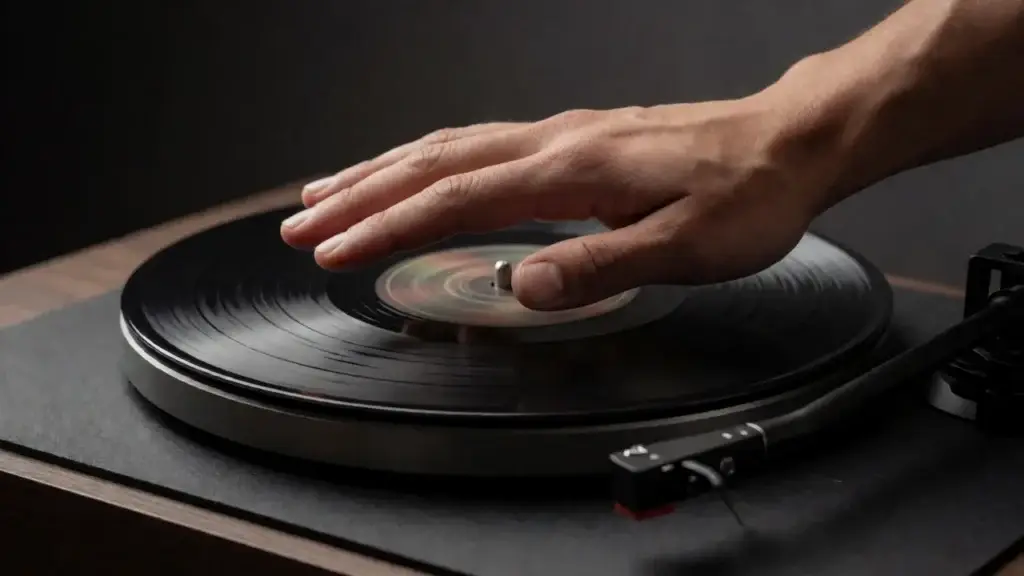
Direct drive puts the motor under the platter, driving it directly. Slow it, release it, and it returns to speed almost immediately. That behaviour is what makes cueing, backspinning and scratching possible.
Torque matters too. A high-torque motor reaches full speed in a fraction of a rotation, which is what allows a track to start on the beat rather than sliding up to it.
What else to look for
- A pitch fader with range. ±8% is the minimum useful; ±16% gives room to match tracks that are further apart.
- An S-shaped tonearm with adjustable weight. Straight tonearms track more securely under a hand but wear records faster.
- Mass. A heavy plinth resists the vibration that a loud room produces. Light decks skip when the bass comes up.
- A removable headshell. Lets you swap cartridges quickly, and DJ cartridges wear out faster than listening ones.
The best DJ turntables for beginners
| Model | Approx. price | Pitch range | USB | Best for |
|---|---|---|---|---|
| Audio-Technica AT-LP120XUSB | $310 | ±10% | Yes | Best value entry |
| Pioneer DJ PLX-500 | $399 | ±8% | Yes | Learning on Pioneer layout |
| Pioneer DJ PLX-1000 | $700 | ±8/16/50% | No | Club-grade without Technics money |
| Technics SL-1200MK7 | $1,100 | ±8/16% | No | The industry reference |
Pioneer DJ PLX-500 — the usual first deck
Around $399. It has the layout you will meet in clubs, enough torque to start on the beat, and a USB output that lets you record your vinyl to files — genuinely useful when you want a digital copy of something not on streaming.
The pitch range is only ±8%, which is limiting when matching tracks with a wide tempo gap. In practice most beginners never reach that limit.
Audio-Technica AT-LP120XUSB — cheaper, nearly as capable
Around $310, with ±10% pitch and a decent AT-VM95E cartridge included. The plinth is lighter than the Pioneer’s, which shows in a loud room, and it doubles more comfortably as a listening turntable — see our turntables under $500 roundup for how it compares to belt-drive decks at the price.
If you are unsure whether DJing will stick, this is the safer purchase — it is a competent home turntable as well.
Technics SL-1200 — the reference, and the cost
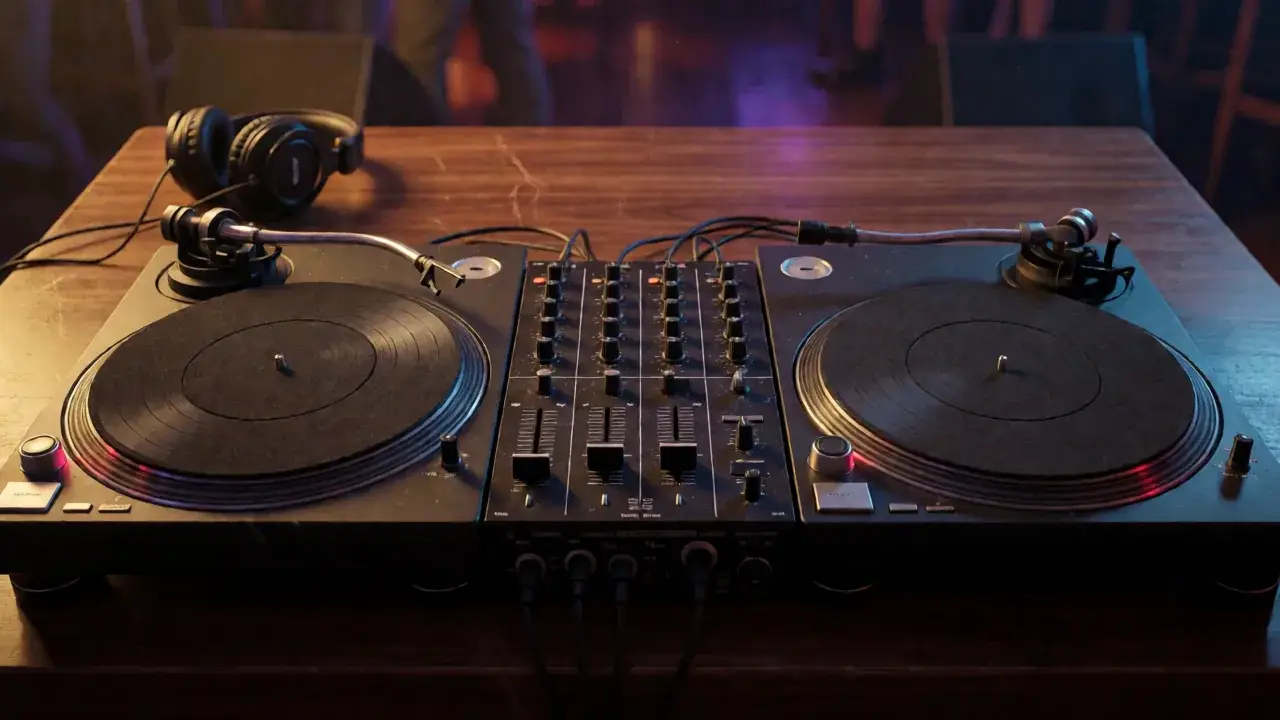
Around $1,100 each. Two of them plus a mixer is over $2,500, which is not a beginner budget. They are built to survive decades of abuse, hold value remarkably well, and are what you will find installed in most booths.
Buy these when DJing is paying for itself. Not before.
What two decks actually cost
| Item | Cost |
|---|---|
| Two PLX-500 turntables | $800 |
| Two-channel DJ mixer | $250 |
| Closed-back headphones | $100 |
| Cartridges and spare styli | $100 |
| Powered monitors | $200 |
| Total | ~$1,450 |
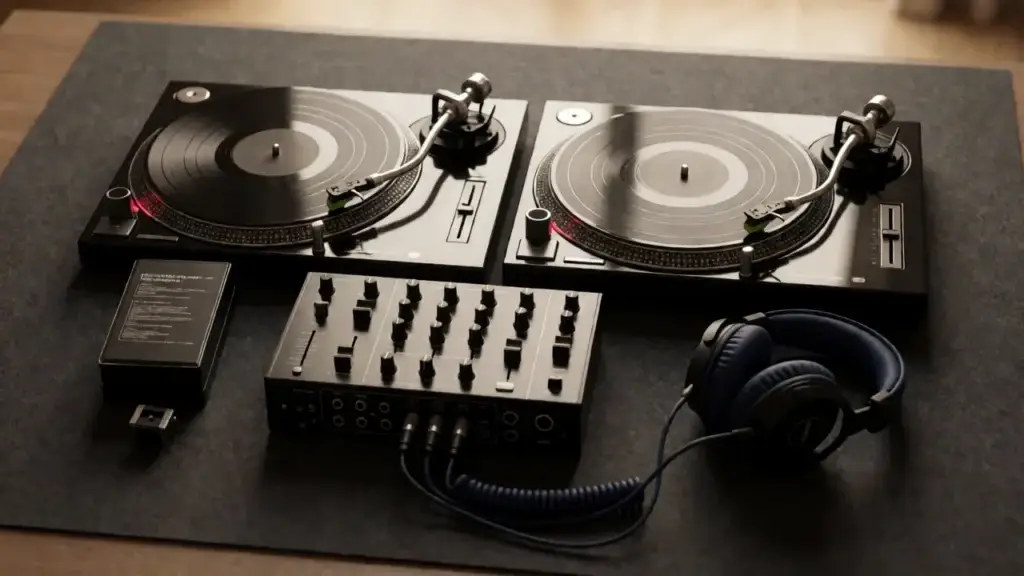
Compare that with a $299 controller that does the same job digitally. The gap is why almost everyone now learns on a controller and adds turntables later, if at all.
Common questions
Can I DJ with one turntable?
You can practise cueing and scratching, but not mixing — that needs two sources. Buying one deck now and one later is a reasonable plan, provided you buy the same model twice so the pitch behaviour matches.
What about timecode vinyl?
Timecode records send a control signal to software instead of music, so you handle vinyl but play digital files. It is the common professional compromise: real turntable feel, no crates to carry. It needs an audio interface and software on top of the decks.
Are used Technics worth buying?
Often, yes — they were built to be serviced and parts remain available. Check the pitch fader for drift and the platter for bearing play. A serviced SL-1200 from the 1990s will outlast a new budget deck.
Do I need a special cartridge?
For scratching, yes. DJ cartridges use a conical stylus and track at higher force so they stay in the groove under a hand. That combination wears records faster, which is why DJs use cheap copies for practice.
Prices checked 27 July 2026 and shown in USD. Street prices move often — treat them as a guide, not a quote.
Where to start
If vinyl DJing is definitely what you want, buy one PLX-500 and a mixer, then add the second deck. If you are still deciding, start with a controller and keep the $1,000.
Our beginner DJ setup guide compares all three routes in more detail.