Summary
The best speakers for bass and sound quality have to reconcile two things that pull in opposite directions, and most speakers marketed for bass sacrifice the second for the first. The pairs that manage both share three characteristics, and none...
Table of Contents
- 1 The short answer
- 2 What actually produces bass
- 2.1 Driver size
- 2.2 Cabinet volume
- 2.3 Tuning honesty
- 3 The best speakers for bass and sound quality
- 3.1 Kanto YU4 — the recommendation
- 3.2 Bookshelf speakers plus a subwoofer — the real answer
- 4 Placement matters more than the speaker
- 5 Common questions
- 5.1 Do I need a subwoofer for music?
- 5.2 Are more watts better for bass?
- 5.3 Why does my bass sound uneven?
- 6 Where to start
The best speakers for bass and sound quality have to reconcile two things that pull in opposite directions, and most speakers marketed for bass sacrifice the second for the first. The pairs that manage both share three characteristics, and none of them is a boosted low-end.
This guide covers what produces real bass, which speakers do it without muddying everything else, and the free change that improves bass more than any purchase.
The short answer
- Best balance: Kanto YU4 — 5.25-inch woofers with weight rather than boom, around $300.
- Best under $200: Edifier R1280DB — modest bass, but clean and honest at around $160.
- Best for real depth: bookshelf speakers plus a subwoofer. Around $500 total and it beats any single pair.
- Free improvement: move the speakers 20cm from the wall and off the floor. Costs nothing, changes more than $200 of upgrade.
What actually produces bass
Bass is moved air. Three things determine how much a speaker can move, and marketing rarely mentions any of them.
Driver size
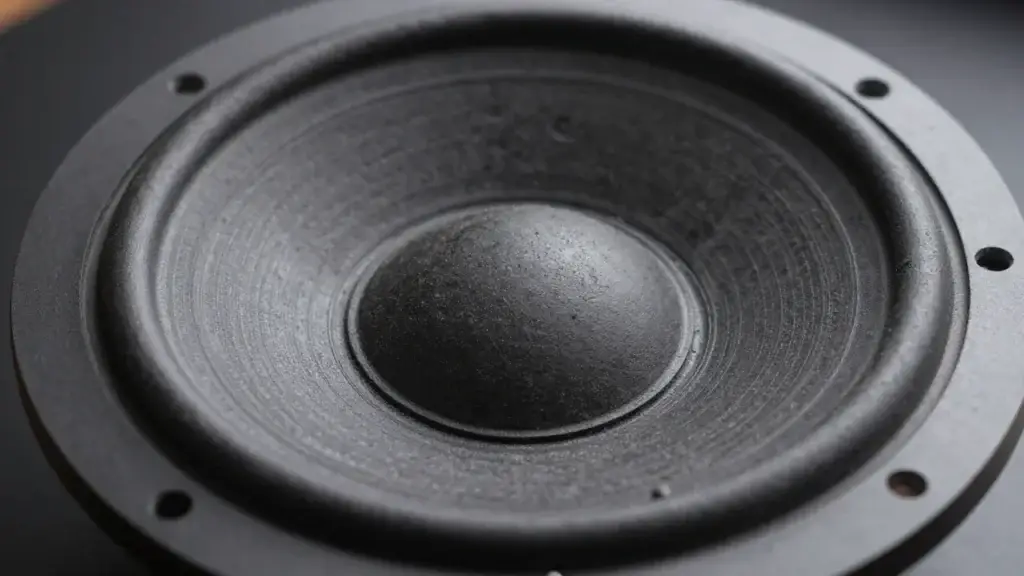
A 5.25-inch woofer moves roughly twice the air of a 4-inch one for the same excursion. This is the least glamorous specification and the most predictive. Below 4 inches, meaningful bass is not physically available regardless of processing.
Cabinet volume
The box behind the driver acts as a spring. Too small and the driver cannot move freely, so bass tightens and disappears. This is why a slim, elegant speaker rarely produces deep bass, and why a heavier cabinet usually sounds better than a light one of the same size.
Tuning honesty
Many budget speakers add a peak around 80–100Hz. It sounds impressive in a showroom for thirty seconds and becomes fatiguing within an album, because that peak masks the bass guitar and kick drum you were trying to hear. A speaker that measures flat and extends less deep will sound better on real music.
The best speakers for bass and sound quality
| Model | Price | Woofer | Bass character |
|---|---|---|---|
| Edifier R1280DB | $160 | 4″ | Clean, rolls off early |
| Kanto YU4 | $300 | 5.25″ | Weighty and controlled |
| Q Acoustics 3030i | $400 | 6.5″ | Deep, needs an amplifier |
| Edifier S3000 Pro | $600 | 6.5″ | Powerful, slightly boosted |
| Bookshelf pair + subwoofer | $500+ | Varies | Deepest, most adjustable |
Kanto YU4 — the recommendation
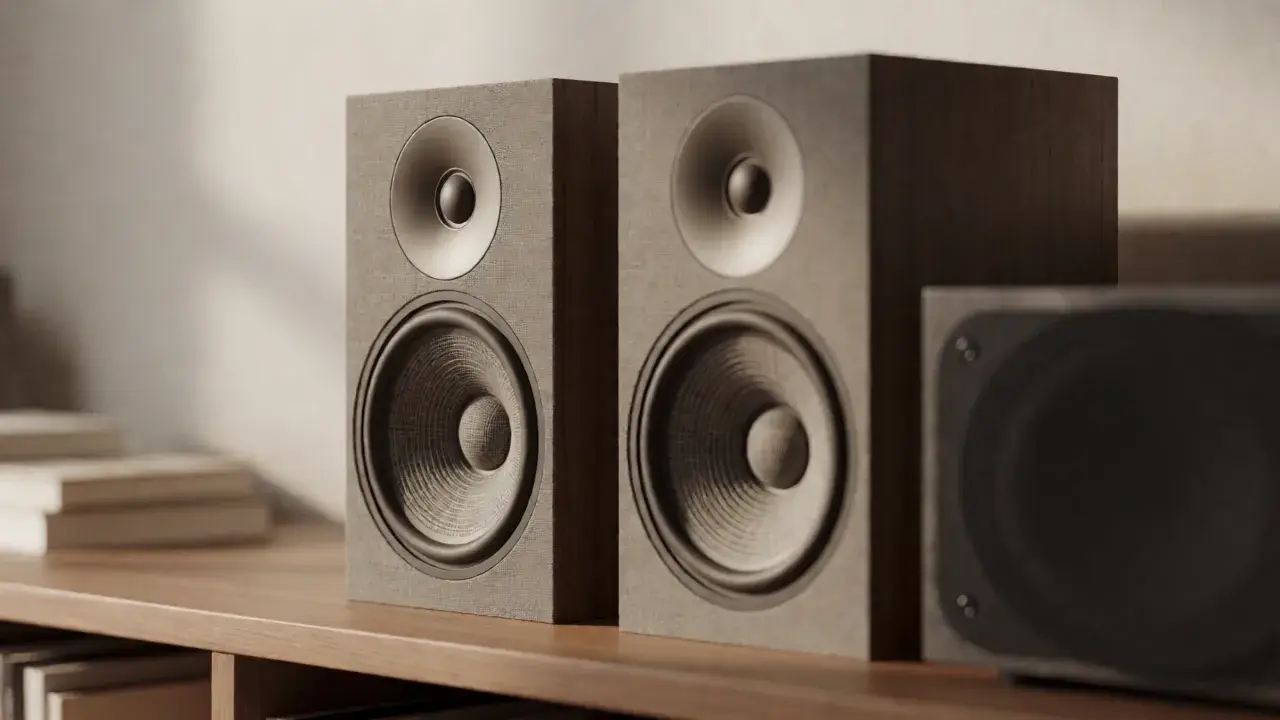
Around $300, and the 5.25-inch woofers are why. Bass has body without dominating, and the tone controls let you add a little if your room is absorbing it. At 70 watts it stays composed where cheaper speakers start compressing.
Bookshelf speakers plus a subwoofer — the real answer
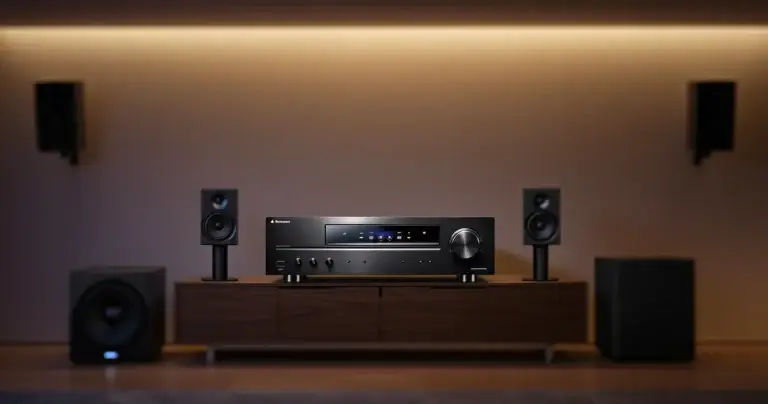
If bass genuinely matters to you, this is the route. A pair of decent bookshelf speakers handles everything above 80Hz, and a subwoofer handles what is below — which is where a small speaker simply cannot go. The alternative is size: budget floorstanding speakers reach 40–50Hz without a separate box.
The advantage beyond depth is control. A subwoofer has its own level and crossover, so you can tune the bass to your room rather than accepting whatever the speaker designer assumed. No single pair offers that.
Placement matters more than the speaker
This section is free and most people ignore it.
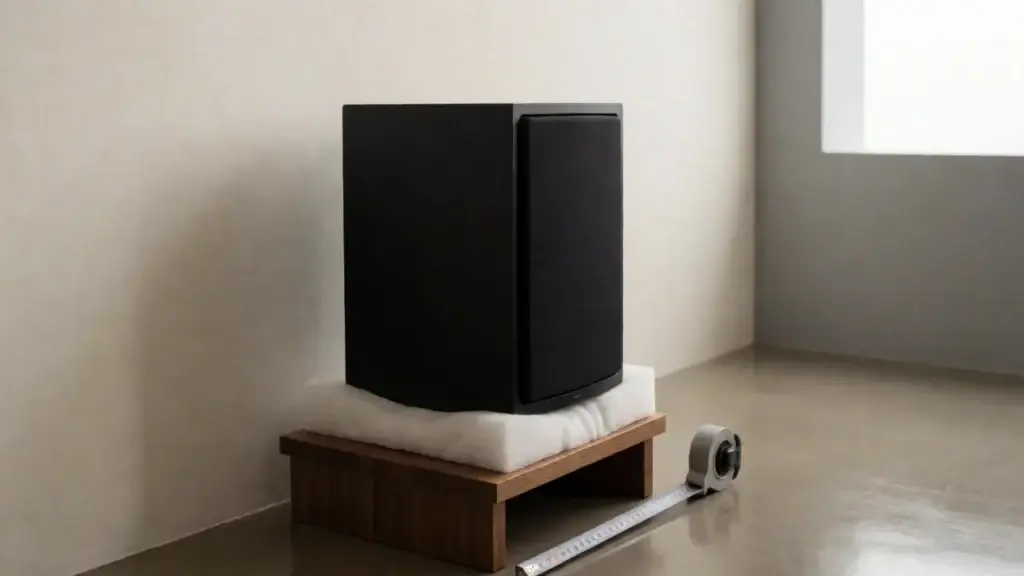
- Distance from the wall. A speaker pushed against a wall gains bass, and gains it unevenly — a boom at one frequency and a hole at another. 20–30cm out is usually the compromise.
- Corners are worst. Two walls plus a floor triple the reinforcement. Bass becomes loud and shapeless.
- Get them off the surface. A speaker sitting directly on a shelf transmits vibration into it, and the shelf resonates. Foam pads cost $20 and audibly tighten the bass.
- Ear height. Not strictly bass, but a speaker firing at your knees loses treble, which makes what remains sound bass-heavy and dull.
Try this before buying anything. It is common to find the speakers you already own were never the problem.
Common questions
Do I need a subwoofer for music?
For most music, no — good bookshelf speakers reach low enough. For electronic music, hip-hop, or anything where sub-bass is part of the composition, a subwoofer reveals content that smaller speakers simply do not reproduce.
Are more watts better for bass?
Only up to a point. Power lets a speaker play loud without distorting, but it cannot make a 4-inch driver move more air than physics allows. Driver size and cabinet volume set the ceiling; power determines how close you get to it.
Why does my bass sound uneven?
Room modes. Every room reinforces some bass frequencies and cancels others depending on its dimensions, and the effect is large — 10dB swings are normal. Moving the speakers or your seat by 30cm can change it completely, which is why placement is worth experimenting with.
Prices checked 27 July 2026 and shown in USD. Street prices move often — treat them as a guide, not a quote.
Where to start
Move what you own first — off the wall, off the shelf, up to ear height. If that is not enough, the Kanto YU4 at around $300. If bass is the whole point, bookshelf speakers plus a subwoofer.
Comparing powered pairs? Our active speakers guide covers the options in more detail, and the home stereo guide covers the amplifier-and-passive-speakers route.