Summary
The best turntable under 500 dollars sits at the most interesting budget in vinyl. Below it you are managing compromises. Above it you are paying for refinement most people cannot hear. Right at it, you can buy a turntable that...
Table of Contents
- 1 The short answer
- 2 What $500 actually buys you
- 2.1 A better cartridge
- 2.2 A heavier platter
- 2.3 Proper adjustability
- 2.4 A plinth that does not resonate
- 3 The best turntable under 500 dollars: five models
- 3.1 Fluance RT85 — the best sound, just over budget
- 3.2 Pro-Ject T1 — the sensible middle
- 3.3 U-Turn Orbit Plus — buy once, improve slowly
- 3.4 Pioneer DJ PLX-500 — only if you mix
- 4 Where the extra money stops helping
- 5 Common questions
- 5.1 Is a $500 turntable noticeably better than a $200 one?
- 5.2 Do I still need a phono preamp?
- 5.3 Manual or automatic at this price?
- 5.4 Can I upgrade a cheaper turntable instead?
- 6 Where to start
The best turntable under 500 dollars sits at the most interesting budget in vinyl. Below it you are managing compromises. Above it you are paying for refinement most people cannot hear. Right at it, you can buy a turntable that will still be good in ten years.
This guide covers what changes as you move up the price range, which models are worth the money in 2026, and where the extra spend stops mattering.
The short answer
- Best overall: Pro-Ject T1 — glass platter, Ortofon cartridge, and the best fundamentals under $350.
- Best value: Pro-Ject E1 — around $260, the cheapest turntable here that still uses a proper Ortofon cartridge.
- Best for DJs: Pioneer DJ PLX-500 — direct drive, high torque, USB output for digitising.
- Best upgrade path: U-Turn Orbit Plus — built to be modified, one part at a time.
What $500 actually buys you
Moving from a $180 turntable to a $450 one changes four specific things. Knowing which of them you care about is the whole decision.
A better cartridge
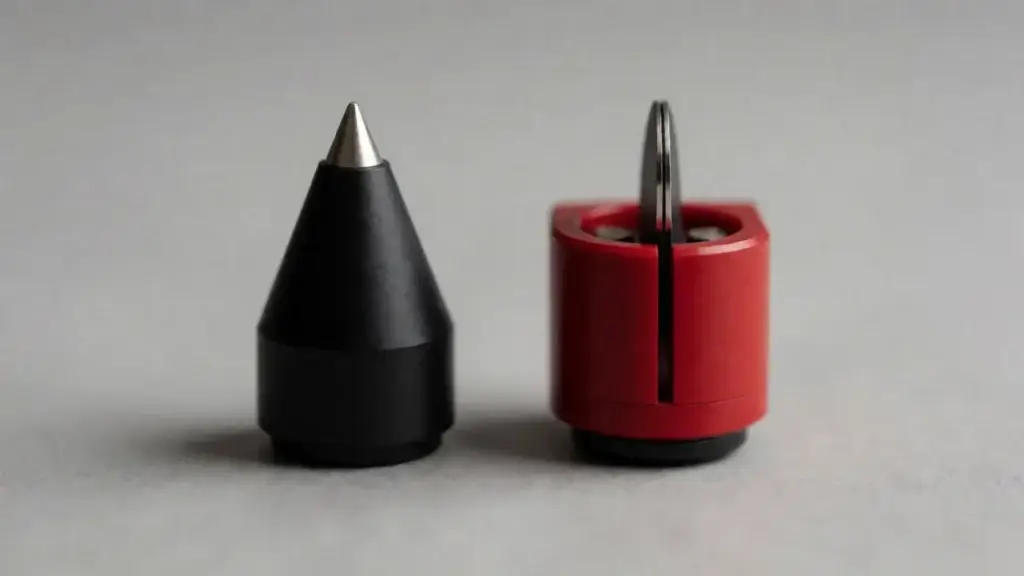
This is where most of the audible improvement lives. Entry-level turntables ship with a conical stylus, which sits in the groove and reads an approximation of it. An elliptical stylus — the Ortofon 2M Red on the Fluance RT85, for instance — contacts more of the groove wall and reads detail the conical simply misses.
You can hear this without training. Cymbals stop sounding like white noise. Vocal sibilance stops being harsh.
A heavier platter
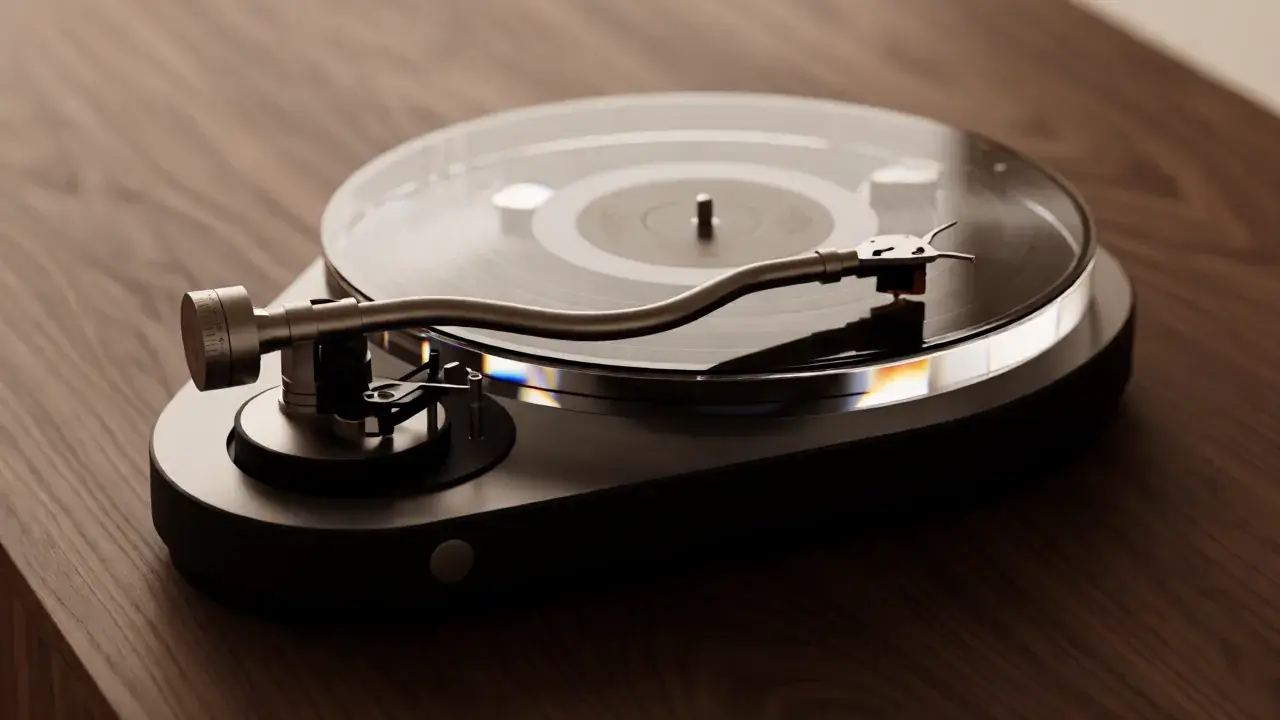
A heavier platter holds speed more consistently, and speed instability is audible as a slight wavering in sustained notes — piano and solo voice reveal it fastest. Acrylic platters, common at this price, also damp resonance better than the thin aluminium used lower down.
Proper adjustability
Adjustable tracking force, anti-skate, and often VTA. This matters less for sound out of the box and more for what happens later: you can fit a better cartridge and set it up correctly, rather than being stuck with what came in the box.
A plinth that does not resonate
Cheap turntables use hollow plastic, which rings. MDF or solid wood absorbs vibration instead of feeding it back into the stylus. This is unglamorous and it matters, particularly if your speakers share a surface with the turntable.
The best turntable under 500 dollars: five models
| Model | Approx. price | Cartridge | Drive | Best for |
|---|---|---|---|---|
| Pro-Ject T1 | $329 | Ortofon OM5e | Belt | Simplicity done well |
| Fluance RT85 | $550 | Ortofon 2M Red | Belt | Best sound at the limit |
| U-Turn Orbit Plus | $309 | Ortofon OM5e | Belt | Upgrading over time |
| Pioneer DJ PLX-500 | $399 | Included MM | Direct | DJing and digitising |
| Pro-Ject E1 | $260 | Ortofon OM5e | Belt | Cheapest with a real cartridge |
Fluance RT85 — the best sound, just over budget
The RT85 pairs an acrylic platter with an Ortofon 2M Red, and that combination is why it keeps appearing at the top of other people’s lists too. Wirecutter picks the RT85N — the same turntable with a different stylus — as its favourite under $600.
It is fully manual, so you place the needle yourself — our setup guide covers balancing the tonearm and setting tracking force. It has no built-in preamp, which means your speakers or amplifier must provide one. Check that before ordering; it is the single most common surprise with this model.
Pro-Ject T1 — the sensible middle
Around $329, and it does less than its rivals on purpose. No USB, no Bluetooth, no automation. What you get instead is a glass platter, a one-piece aluminium tonearm, and an Ortofon cartridge, made in the EU.
If you want the money spent on the parts that touch the record rather than on features, this is the pick.
U-Turn Orbit Plus — buy once, improve slowly
The Orbit Plus is designed around upgrading. Acrylic platter and Ortofon OM5e out of the box, and every component — cartridge, platter, preamp, even the plinth colour — can be swapped later.
It suits people who want to spend $310 now and another $150 in two years, rather than $550 today.
Pioneer DJ PLX-500 — only if you mix
Direct drive, high torque, and a pitch fader. For home listening a belt drive at this price sounds better, so buy the PLX-500 only if you actually intend to beatmatch — our guide to the best DJ turntables for beginners covers that use properly — or if you want to digitise a collection, since the USB output is genuinely useful.
Where the extra money stops helping
Worth saying plainly: past about $500, improvements get small and expensive. A $1,200 turntable is better than a $500 one, but not by the margin the price suggests.
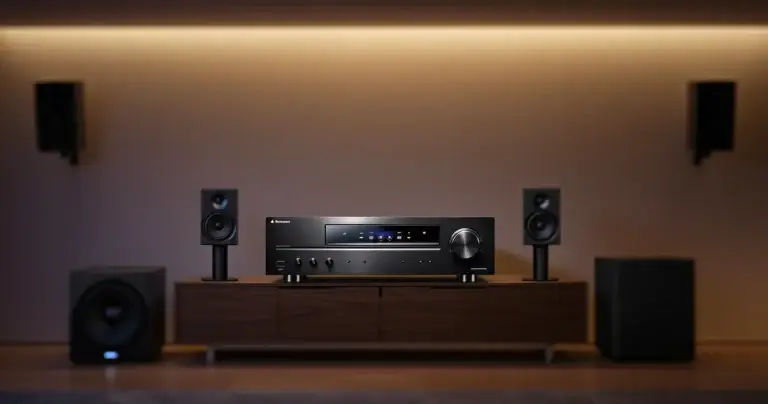
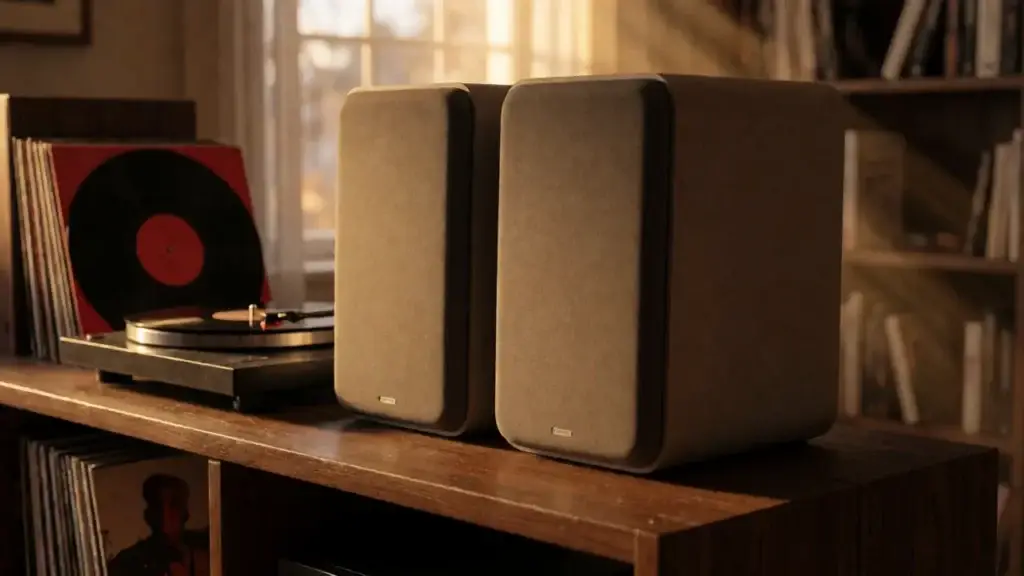
If you have $800 to spend on vinyl, a $450 turntable and $350 of speakers will beat a $700 turntable and $100 speakers by a wide margin. Speakers and room placement change the sound far more than the turntable does, and almost everyone gets this ratio wrong in the same direction. Our turntable and speaker packages guide splits four budgets the sensible way, and the home stereo guide covers the amplifier route.
Common questions
Is a $500 turntable noticeably better than a $200 one?
Yes, mostly because of the cartridge. The difference between a conical and a good elliptical stylus is the clearest single upgrade in the whole chain. Whether it justifies $300 depends on your speakers — on cheap ones, much of the improvement is lost before it reaches your ears.
Do I still need a phono preamp?
Often yes. Several turntables at this price omit the built-in preamp deliberately, on the assumption you will use a better external one. Check the specification of both your turntable and your speakers before ordering, and budget $50–$150 if neither has one.
Manual or automatic at this price?
Almost everything good under $500 is manual. Automation adds mechanical complexity that manufacturers would rather spend on the platter and tonearm. If automatic operation matters to you, the compromise is worth making at the lower end of the range instead.
Can I upgrade a cheaper turntable instead?
Sometimes. Fitting a better cartridge to a $250 turntable is a real improvement for around $100. But a cheap tonearm and plinth limit how much that cartridge can deliver, so past a point you are upgrading the wrong component.
Prices checked 27 July 2026 and shown in USD. Street prices move often — treat them as a guide, not a quote.
Where to start
If your budget is genuinely $500 and you already have decent speakers, buy the Fluance RT85, accepting that street prices run closer to $550 than $500. If it is closer to $300, the Pro-Ject T1. If you expect to tinker, the U-Turn Orbit Plus.
And if you do not yet have speakers, spend less on the turntable. Our guide to record players with speakers covers pairings that split the budget more sensibly, and our beginner turntable guide covers the models below this range.