Summary
The best home stereo system for music is two speakers and something to drive them. Everything beyond that is detail. But the detail is where people either build something they love or spend $800 on a setup that sounds worse...
Table of Contents
- 1 The short answer
- 2 Three ways to build a stereo system
- 2.1 Powered speakers — start here if unsure
- 2.2 Amplifier plus passive speakers — the traditional route
- 2.3 All-in-one systems — the one to avoid
- 3 The best home stereo system for music, by budget
- 3.1 Around $250
- 3.2 Around $600
- 3.3 Around $1,200
- 4 Where the money should go
- 5 Common questions
- 5.1 Do I need a subwoofer?
- 5.2 How many watts do I need?
- 5.3 Can I use a home theatre receiver for music?
- 5.4 Is secondhand hi-fi worth buying?
- 6 Where to start
The best home stereo system for music is two speakers and something to drive them. Everything beyond that is detail. But the detail is where people either build something they love or spend $800 on a setup that sounds worse than a $300 one.
This guide covers the three routes into a stereo system, what each costs in 2026, and how to split a budget so the money lands where you can hear it.
The short answer
- Simplest good system: a pair of powered speakers and a streamer. Around $250, two boxes, no amplifier to choose.
- Best value: a stereo amplifier plus passive bookshelf speakers. Around $600, and it will outlast three generations of wireless gear.
- Best for vinyl: the same, with a phono input. Check the amplifier has one before buying.
- Skip: all-in-one mini systems with built-in speakers. They save space and cost you most of the sound.
Three ways to build a stereo system
| Approach | What you buy | Typical cost | Trade-off |
|---|---|---|---|
| Powered speakers | Two speakers, one cable | $200–$600 | Amplifier is fixed, cannot upgrade separately |
| Amp + passive speakers | Amplifier, two speakers, speaker cable | $500–$1,500 | More boxes, more decisions |
| All-in-one mini system | One unit with speakers attached | $150–$400 | Sounds like one box, because it is |
Powered speakers — start here if unsure
Powered (or “active”) speakers have the amplifier built into one cabinet. You plug in a source and they play. No amplifier to match, no speaker cable to run, no impedance to think about. Our active speakers guide covers the pairs worth buying at each price.
The engineering argument in their favour is real: the manufacturer matches the amplifier to the drivers precisely, which nobody assembling separates can do as well. The argument against is equally real: when the amplifier fails in eight years, the speakers are firewood.
Amplifier plus passive speakers — the traditional route
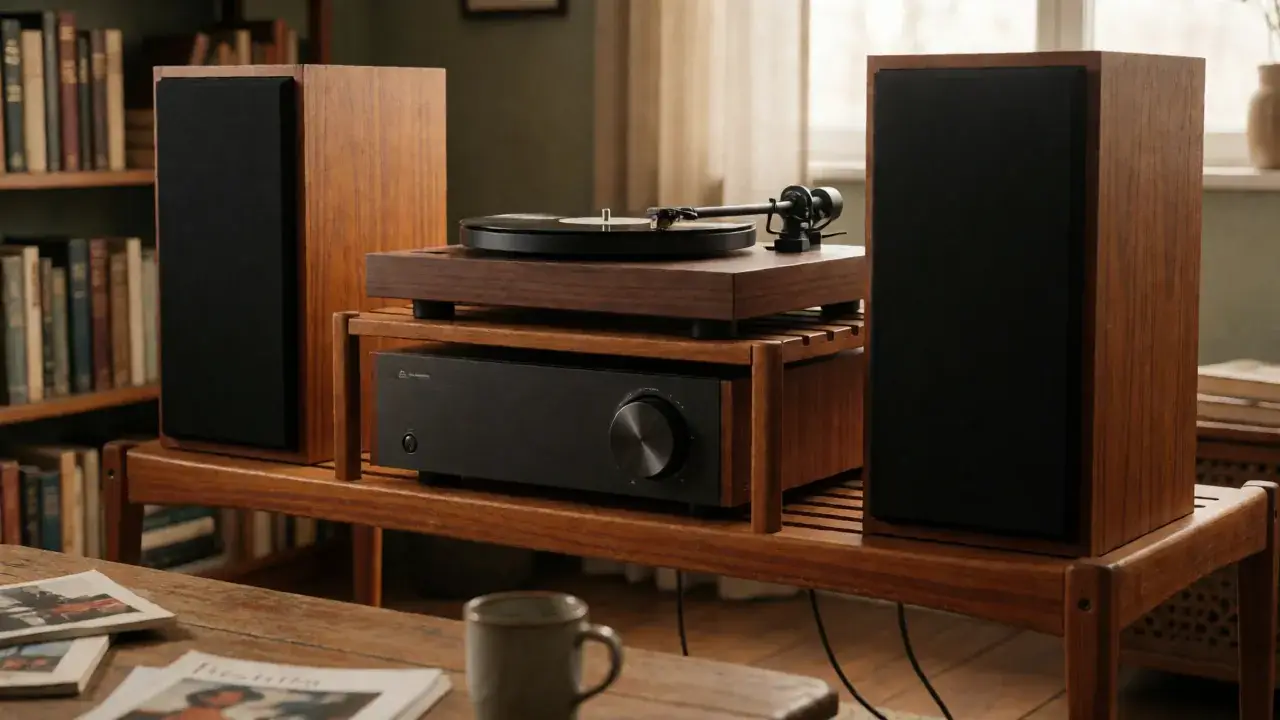
More money and more shelf space, and it remains the best-sounding option per dollar above about $500. It is also repairable and upgradeable one component at a time, which is why secondhand hi-fi from the 1980s still works and a 2015 Bluetooth speaker does not.
A good starting split is roughly half the budget on speakers, a third on the amplifier, and the rest on cables and a source.
All-in-one systems — the one to avoid
A single chassis with speakers either attached or supplied as small satellites. They exist because they fit on a sideboard and require no thought.
The problem is stereo itself. Two speakers 30cm apart cannot produce a stereo image — the effect that makes a recording sound like musicians occupying space rather than sound coming out of a box. Separating two cheap speakers by a metre and a half beats an expensive unit where they are welded together.
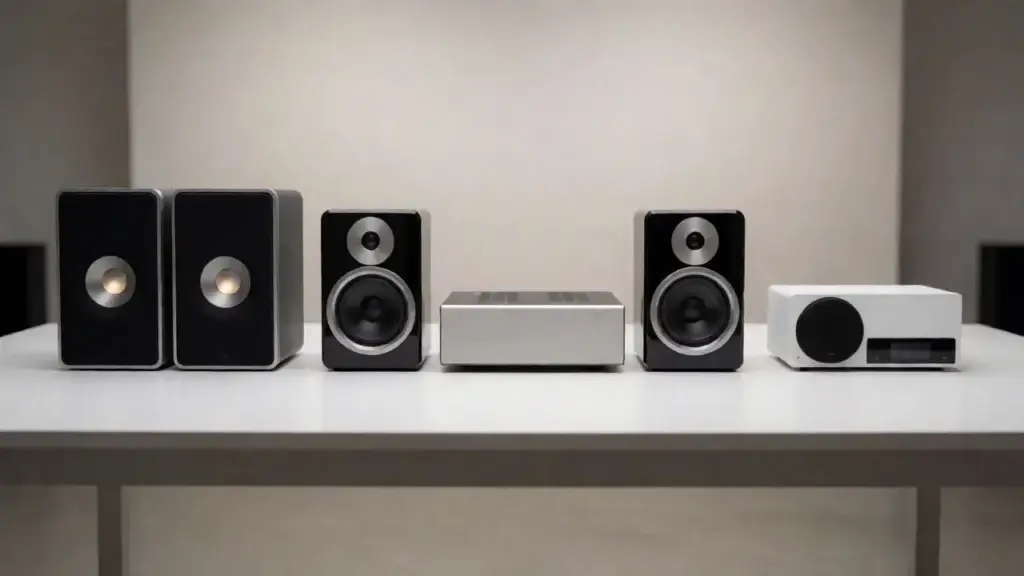
The best home stereo system for music, by budget
Around $250
Edifier R1280DB powered speakers, roughly $160–$190. They include a phono stage, so a turntable connects directly, and they have optical and Bluetooth inputs for a TV or phone. Add a cheap streamer if you want Spotify without your phone tethered.
This is the point where a system stops sounding like a gadget and starts sounding like music.
Around $600
A used or entry-level integrated amplifier with a phono input, plus a pair of passive bookshelf speakers such as the Wharfedale Diamond series or Q Acoustics 3030i. Budget around $250 for the amplifier and $350 for the speakers.
This is the sweet spot. It handles vinyl, streaming and a television, and every part can be replaced independently.
Around $1,200
Better speakers, mostly. Floorstanders instead of bookshelf models if the room is large, or considerably better bookshelf speakers with a subwoofer if it is not. The amplifier matters less than people expect once you are past the entry level.
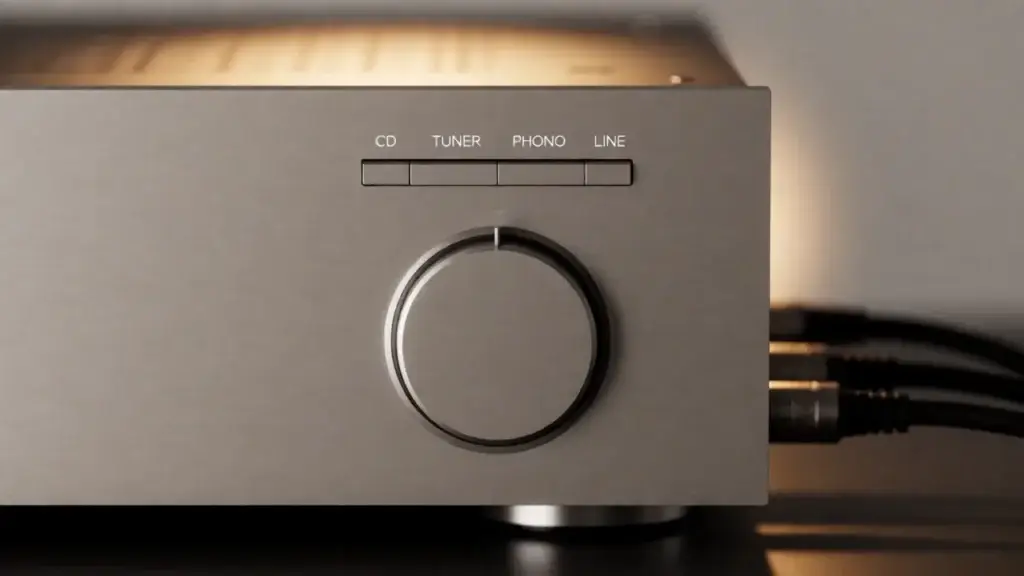
Where the money should go
This is the part most people get wrong, and it costs them more than any single purchase decision.
- Speakers first. They convert electricity into sound and are the least perfect link in the chain by a wide margin. If low-end weight matters to you, our guide to speakers for bass and sound quality covers what actually produces it.
- Placement second, and it is free. Speakers a metre and a half apart, angled toward the listener, away from corners and at ear height. This does more than a $300 upgrade.
- Amplifier third. Any competent amplifier with enough power for your room sounds much like any other. Power ratings matter; brand mystique mostly does not.
- Cables last. Use decent copper of adequate gauge. There is no measurable case for spending more, and plenty of marketing that says otherwise.
Common questions
Do I need a subwoofer?
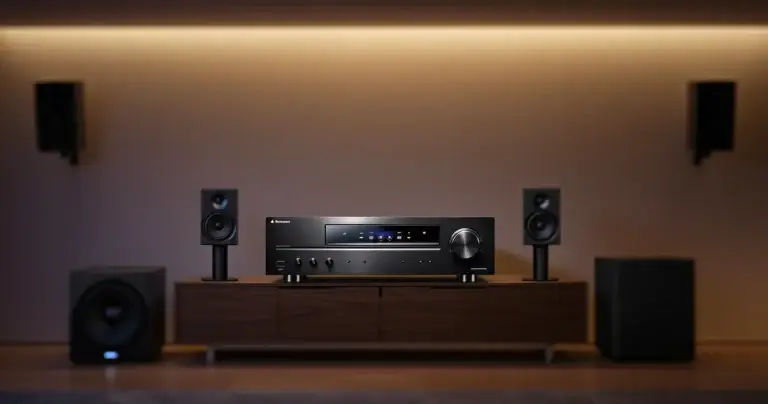
For music, usually not — good bookshelf speakers reach low enough for most recordings. For films, yes: the low-frequency effects channel is a real part of the mix. If you mainly listen to music, put the money into better main speakers instead.
How many watts do I need?
Less than the marketing implies. 30–50 watts per channel drives most bookshelf speakers to uncomfortable volume in a normal room. Speaker sensitivity matters more than amplifier power, and it is the specification nobody advertises.
Can I use a home theatre receiver for music?
Yes, though a stereo amplifier at the same price will usually sound better for music — the receiver is spending its budget on seven channels and video processing. If you want one box for both, a receiver is the sensible compromise.
Is secondhand hi-fi worth buying?
For amplifiers, often yes — they are simple and last decades. For speakers, inspect the drivers and check the foam surrounds have not perished. Avoid anything with visible cabinet damage, since a leaking cabinet cannot be fixed easily.
Prices checked 27 July 2026 and shown in USD. Street prices move often — treat them as a guide, not a quote.
Where to start
If the budget is $250, buy powered speakers and stop. If it is $600 or more, buy an amplifier and passive speakers, and spend the larger share on the speakers.
Playing records? Our guide to record players with speakers covers turntable and speaker pairings, the packages guide costs out four complete systems, and the beginner turntable guide covers which deck to start with.