Summary
Choosing the best turntable for beginners is harder than it should be. Half the advice online is written by people selling one model, and the other half assumes you already know what a phono preamp does. This guide is neither....
Table of Contents
- 1 The short answer
- 2 What actually matters in a beginner turntable
- 2.1 Tracking force
- 2.2 Belt drive vs direct drive
- 2.3 Built-in phono preamp
- 2.4 A replaceable cartridge
- 3 The best turntable for beginners in 2026: six picks
- 3.1 Audio-Technica AT-LP60X — the default recommendation
- 3.2 Fluance RT81 — worth the extra $120
- 3.3 Angels Horn H019 — if you do not want separate speakers
- 4 What to avoid, and why
- 5 What else you need
- 6 Common questions
- 6.1 Do cheap record players really damage vinyl?
- 6.2 Is Bluetooth worth having?
- 6.3 Should I buy a vintage turntable instead?
- 6.4 Automatic or manual?
- 7 Where to start
Choosing the best turntable for beginners is harder than it should be. Half the advice online is written by people selling one model, and the other half assumes you already know what a phono preamp does. This guide is neither. It covers what actually matters at the entry level, which models are worth your money in 2026, and the one mistake that quietly ruins record collections.
The short answer
If you want a recommendation without the reasoning, here it is:
- Best for most beginners: Audio-Technica AT-LP60X — fully automatic, around $180, and it will not damage your records.
- Best if you can stretch: Fluance RT81 — a real upgrade path, adjustable tracking force, around $300.
- Best all-in-one: Angels Horn H019 — turntable and speakers in one box, no separate amp needed.
- Avoid: suitcase-style players under $80. More on why below.
What actually matters in a beginner turntable
Four things separate a turntable that protects your records from one that grinds through them. Everything else is preference.
Tracking force
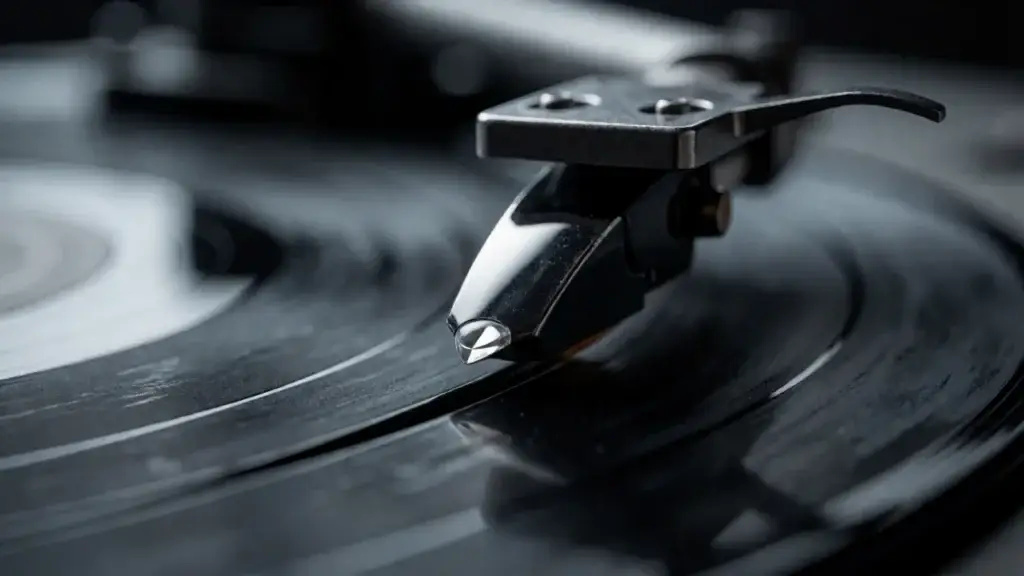
This is the downward pressure the needle puts on the groove, measured in grams. A properly set up turntable tracks at roughly 1.5–2.5g. Cheap players often track at 5g or more, with no way to adjust it. That extra weight physically wears the groove every time you play the record — which is where the “cheap players destroy vinyl” reputation comes from. It is not a myth.
Belt drive vs direct drive
Belt drive isolates the platter from motor vibration, which means quieter playback. Direct drive spins the platter directly, which means faster startup and the ability to hold pitch under a hand — the reason DJs use it. For home listening, belt drive is the better default. Choose direct drive only if you plan to mix.
Built-in phono preamp
A turntable’s output is far too quiet to plug into normal speakers. A phono preamp brings it up to line level. Most beginner turntables include one, and it can usually be switched off later if you buy a better external unit. If a turntable has no preamp and your amplifier has no phono input, you will need to buy one separately — budget around $50.
A replaceable cartridge
The cartridge holds the stylus, and the stylus wears out — typically after 500 to 1,000 hours. On a good turntable you swap it for a few tens of dollars. On a sealed budget player you cannot, so when the stylus wears, the whole unit becomes disposable. This single detail is the clearest dividing line between a turntable worth buying and one that is not.
The best turntable for beginners in 2026: six picks
| Model | Approx. price | Drive | Automatic | Best for |
|---|---|---|---|---|
| Audio-Technica AT-LP60X | $179 | Belt | Yes | Most first-time buyers |
| Audio-Technica AT-LP60XBT | $279 | Belt | Yes | Bluetooth without losing quality |
| Fluance RT81 | $300 | Belt | No | Growing into the hobby |
| U-Turn Orbit Basic | $249 | Belt | No | Upgrade-friendly, US-made |
| Rega Planar 1 | $595 | Belt | No | Buying once, keeping for years |
| Angels Horn H019 | $240 | Belt | No | All-in-one with speakers |
Audio-Technica AT-LP60X — the default recommendation
The AT-LP60X is fully automatic: press start and the tonearm places itself, and it lifts and returns at the end of the side. That matters more than it sounds. The most common way beginners damage a record is dropping the needle by hand, and automation removes that risk entirely.
The trade-off is limited adjustability — tracking force is preset and the cartridge is not designed to be swapped. For a first turntable that is a reasonable compromise. If you are still buying records in three years, you will want something better, and by then you will know what you want.
Fluance RT81 — worth the extra $120
Manual operation, adjustable counterweight and anti-skate, a proper Audio-Technica AT95E cartridge, and a solid wood plinth that resists vibration. This is the cheapest turntable on the list that behaves like a real hi-fi component. Manual means you set it up yourself — our turntable setup guide walks through the whole process.
It asks more of you: you place the needle yourself and set the tracking force with a supplied gauge. That takes about ten minutes once, and then it is done.
Angels Horn H019 — if you do not want separate speakers
Most all-in-one players are the compromise you should avoid. This one is the exception: the built-in speakers are genuinely listenable rather than tinny, and the turntable underneath is competent. If you want one box, no cables, and no research into amplifiers, start here — and see our all-in-one record player guide for the four checks that separate the good ones from the rest.
What to avoid, and why
The suitcase-style players sold in gift shops and department stores for $60–$80 are the single most common first purchase, and the most regretted. They typically use a ceramic cartridge tracking at 5g or heavier, with no adjustment and no replaceable stylus.
Played once, a record survives. Played weekly for a year, it does not — you will hear the high frequencies dull and the surface noise rise. If the records are cheap reissues, that may not bother you. If you inherited your parents’ collection, use something else.
There is a real debate here worth acknowledging. Plenty of people own these players, enjoy them, and have not noticed a problem. If your records are replaceable and you mainly want the ritual, a cheap player is a legitimate choice. Just make it knowingly.
What else you need
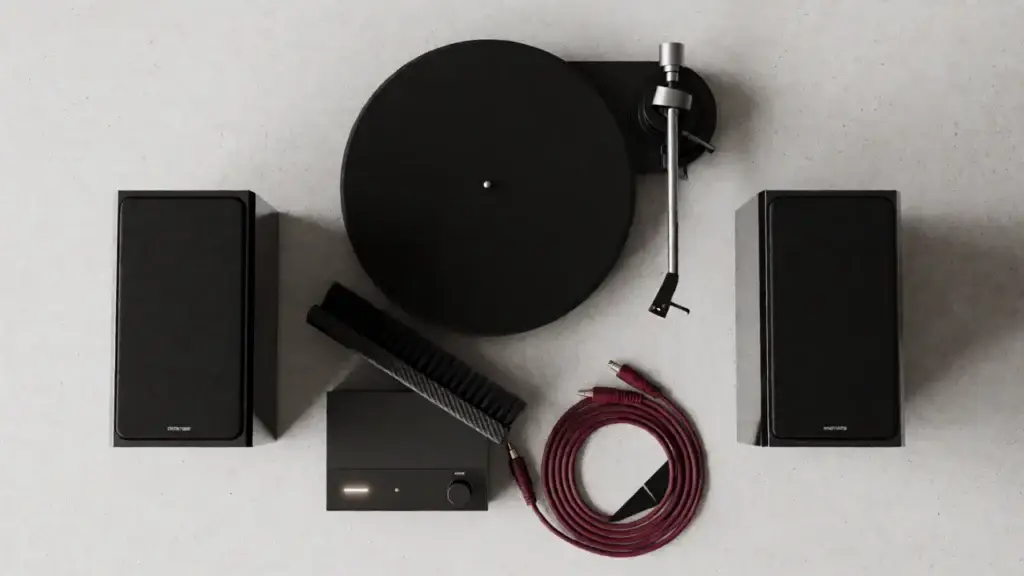
A turntable alone makes no sound. Unless you buy an all-in-one, budget for:
- Powered speakers ($150–$250) — these have an amplifier built in. The Edifier R1280DB is the common starting point; our guide to the best active speakers covers the alternatives.
- Or an amplifier plus passive speakers — better sound, more money, more cables.
- A phono preamp — only if neither your turntable nor your amp has one.
- A carbon fibre brush ($15) — dust in the groove sounds like crackle and wears the stylus. This is the cheapest upgrade you will ever make.
A realistic all-in budget for a setup that sounds good and treats records properly is $300–$400. Below roughly $200 you are making real compromises; above $600 you are buying refinement rather than fixing problems.
Common questions
Do cheap record players really damage vinyl?
Yes, though the damage is gradual rather than immediate. Excessive tracking force and a worn stylus both accelerate groove wear. A single play on a cheap player will not ruin a record; hundreds of plays will measurably degrade it.
Is Bluetooth worth having?
It is convenient and it does compress the signal slightly. If Bluetooth is what gets you listening to records more often, that convenience is worth more than the small quality loss. Models like the AT-LP60XBT offer both wired and wireless output, so you are not locked in.
Should I buy a vintage turntable instead?
A serviced vintage deck can outperform anything new at the same price. An unserviced one usually needs a new belt, a new stylus, and possibly new capacitors — easily $150 in parts before it plays properly. Buy vintage if you enjoy the tinkering or can inspect it in person. Otherwise buy new.
Automatic or manual?
Automatic for a first turntable. It removes the most common cause of accidental damage and it makes casual listening effortless. Manual decks offer more control and tend to be better built at the same price, so they suit a second purchase once you know you are staying with the hobby.
Prices checked 27 July 2026 and shown in USD. They move often — treat them as a guide, not a quote.
Where to start
Buy the AT-LP60X and a pair of Edifier R1280DB powered speakers. That is roughly $370, it sounds good, and it will not harm your records — we cover that pairing and three others in our turntable and speaker packages guide. If you already know you are serious, spend the extra on a Fluance RT81 instead and you will not need to upgrade for years.
Ready to spend more? Our guide to the best turntables under $500 covers what the extra money actually buys.
Not sure whether to buy separate speakers or an all-in-one? Our guide to the best record players with speakers compares both routes.
The turntable that gets played is better than the one that was theoretically optimal. Pick from this list, set the tracking force correctly, brush your records, and the rest is just listening.